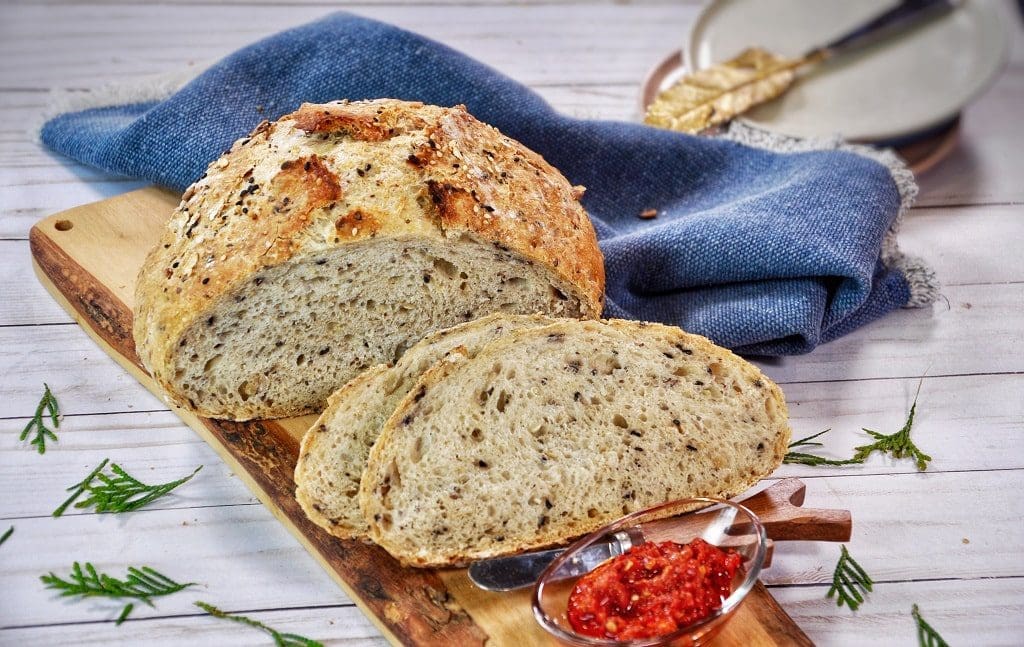
This Gluten-Free Keto Multi-Seed Bread is absolutely divine. This protein-packed, low-carb, seeded quick bread is loaded with vitamins, minerals, and fiber.
This gluten-free keto version is a great replacement for those who cannot tolerate yeasted bread—keto bread, just like one from the bakery. If you hadn’t baked this bread yourself, you would never believe it was gluten-free and low-carb.
The keto bread is light and airy, making it great for sandwiches. The best part is that this gluten-free bread has only about 1 gram of sugar per slice.
In this hearty keto bread, I added chia and sesame seeds, which are excellent sources of omega-3 fatty acids and are rich in antioxidants. The seeds also provide fiber, iron, and calcium, to name a few.
Preparation Time: 10 minutes
Cooking Time: 50 minutes
Serves: 14 slices
Only 1g of sugar per slice
[nutrifox id=”200087″]
Keto Multi-Seed Bread Recipe Details
Making this delicious, healthy, gluten-free keto multi-seed bread is so easy.
First, you mix the dry ingredients. Then, you beat the eggs and add the coconut oil with butter. Once the wet mixture is well mixed, slowly add the dry ingredients until blended.
When the batter is ready, pour it into a loaf pan and bake. So there is no kneading or waiting for the dough to rise.
Don’t you love it? This recipe is simple, yet the bread has a lovely texture and is packed with nutrient-rich seeds. We love this keto bread for making sandwiches. It is so perfect.
You can also toast the bread and serve it for breakfast with a poached egg, avocado, or tomato slices. The best way to store the bread after the first day is in the fridge.
This is an Easy keto bread recipe! Some people will not venture to make home-baked bread because the recipes are often too complicated with too many ingredients or take a long time to prepare.
However, this is probably one of the easiest bread recipes. So give it a try, and let me know how it turned out. In our home, I often have this keto bread on hand because it keeps my carbs low, and I enjoy the health benefits of this nutritious low-carb bread. Low-carb bread recipe with only 8 ingredients.
I still need to tell you about the best part! It may surprise you, but this gluten-free keto bread recipe has only eight ingredients plus salt.
Don’t you love it! Please give this bread recipe a try. You will not be disappointed. If you are following a low-carb diet, please check out our selection of keto recipes. You will find recipes for desserts, soups, muffins, bread, and more!
Keto Multi-Seed Bread Ingredients:
1. 3 cups almond flour
2. 1 Tbsp + 1 tsp. sesame seeds (black or white)
3. 1 Tbsp. chia seeds
4. 1 tsp. GF aluminum-free baking powder
5. ½ tsp. sea salt
6. ½ tsp. xanthan gum
7. 7 organic eggs
8. ½ cup grass-fed butter, melted
9. 2 Tbsp. coconut oil
Instructions 1 loaf makes about 14 slices:
Preheat oven to 355 F and line an 8 x 4-inch loaf pan with parchment paper
In a small bowl, mix together almond flour, 1 tablespoon of sesame seeds, chia seeds, baking powder, salt, and xanthan gum
In a separate bowl, beat the eggs with an electric mixer for 2 minutes
Combine butter with coconut oil, and while beating the eggs slowly add to eggs
Add dry ingredients and mix until blended
Pour mixture into prepared loaf pan and sprinkle with remaining sesame seeds
Bake for 50 minutes.
Let the Keto Multi-Seed Bread cool in the loaf pan for 15 minutes, then transfer it to a cooling rack to cool completely.
Are you considering a one week smoothie diet to shed some pounds and detoxify your body? While it may seem like a quick fix, we’re here to tell you that it’s not sustainable in the long run.
Sure, sipping on delicious fruity blends for seven days straight might give you an instant energy boost and help kickstart healthy eating habits. But what happens when the week is over?
In my latest blog post, you will find out why relying solely on smoothies as meal replacements isn’t a sustainable solution for weight loss or overall wellness.
What is a Smoothie Diet
A smoothie diet is a diet where you consume nothing but smoothies for a set period. This usually lasts for one week or less.
The idea behind a smoothie diet is that you can consume more fruits and vegetables than you typically would and that these smoothies will help you detoxify and cleanse your body.
There are many different smoothie recipes, and you can tailor them to your preferences.
However, most people who go on a smoothie diet use a lot of leafy greens, fruits, and water in their smoothies. Some people also add protein powder or other supplements to ensure they get all the nutrients they need.
While a week-long smoothie diet may seem like a great way to reset your eating habits and lose weight quickly, it’s not a sustainable way of eating long-term.
You’ll likely feel deprived and hungry if you only consume smoothies, and it’s hard to stick to a liquid diet for over a few days. Plus, you miss out on important nutrients like fiber when you eat nothing but smoothies.
If you want to make lasting changes to your diet, it’s better to focus on adding more whole fruits and vegetables into your meals and snacks instead of trying fad diets like the Smoothie Diet.
Benefits of Smoothie Diets
A smoothie diet may be effective for weight loss in the short term, but it is not a sustainable or healthy way to eat long-term. Some of the benefits of a smoothie diet include:
Quick and easy to make: Smoothies are quick and easy to make, which makes them an ideal option for busy people who don’t have time to cook healthy meals.
Convenient: Smoothies are also convenient as they can be made ahead of time and stored in the fridge for later. This means you can have a healthy meal or snack ready to go when you need it.
Nutrient-rich: Smoothies are packed with nutrients, including vitamins, minerals, antioxidants, and fiber. This makes them an excellent way to fuel your body and reach your daily nutrient needs.
Weight loss: A smoothie diet may help you lose weight in the short term by reducing your calorie intake and increasing satiety (fullness). However, this weight loss is often not sustainable long-term as it’s difficult to stick to a liquid diet for an extended period of time. In addition, once you start eating solid foods again, you may regain any lost weight quickly.
Why One Week Smoothie Diet Isn’t Enough?
One week on a smoothie diet may lead to some initial weight loss, but it’s not enough time to make lasting changes. Studies have shown that it takes about six weeks to two months for people to start seeing real results from lifestyle changes. So, while a week-long smoothie diet may jumpstart your weight loss journey, it’s not sustainable in the long run.
Here are some other reasons why one week smoothie diet isn’t enough:
You Need Time To Adjust: Your body needs time to adjust to any new diet or eating plan and a one week smoothie diet might not be enough.
If you go from eating solid foods to drinking nothing but smoothies for seven days, you’re likely to experience some side effects like headaches, fatigue, and irritability. These side effects are usually temporary and will go away as your body gets used to the change, but they can still be unpleasant.
You Might Miss Important Nutrients: Smoothies are a great way to get lots of nutrients in one meal, but they’re not perfect. If you’re only drinking smoothies for a week, you might miss out on important nutrients like fiber and protein. Fiber is important for keeping you regular and helping with weight loss, while protein is essential for repairing muscles and preventing cravings.
You’ll Rebound After A Week: When you go on a restrictive diet like a smoothie diet, your body goes into survival mode. Once you resume eating solid foods, your body will be more likely to regain the weight quickly – sometimes even faster than you lost it. That’s why longer-term weight loss strategies that incorporate healthy eating habits and exercise are so important.
Overall, a one-week smoothie diet isn’t enough time for your body to adjust or for you to make lasting changes. While it can be a good way to jumpstart your journey, you need to think long-term if you want real results.
Nutritional Deficiencies With Short-Term one week Smoothie Diet
When people go on short-term smoothie diets, they may not be getting all the nutrients their bodies need. This can lead to deficiencies in essential vitamins and minerals. Some of the most common deficiencies associated with short-term smoothie diets include:
Vitamin A: Vitamin A is important for vision, immune function, and cell growth. Deficiencies can cause night blindness and an increased risk of infections.
Vitamin B12: Vitamin B12 is essential for making red blood cells and keeping the nervous system healthy. Deficiencies can cause anemia and nerve damage.
Vitamin C: Vitamin C is important for wound healing, bone growth, and immune function. Deficiencies can cause scurvy, which is characterized by easy bruising, bleeding gums, and fatigue.
Calcium: Calcium is essential for strong bones and teeth. Deficiencies can cause osteoporosis and an increased risk of fractures.
Iron: Iron is necessary for transporting oxygen in the blood. Deficiencies can cause anemia and fatigue.
Longer-Term Results That Last
Quick fixes and fad diets are usually not the answer when it comes to dieting. If you’re looking for sustainable, long-term results, a one week smoothie diet is not for you.
A smoothie diet may help you lose weight in the short term, but it’s not sustainable eating. You’ll likely regain any weight you lost once you go back to your normal diet.
Smoothies are also often very high in sugar, which can cause spikes in blood sugar levels. If you have diabetes or are prediabetic, a smoothie diet can be dangerous.
A better option for sustainable weight loss is to focus on eating whole foods and exercising regularly. This type of lifestyle change is more likely to lead to lasting results.
Sample Meal Plans for a Sustainable Smoothie Diet
For one week Smoothie Diet, you can try out a sustainable smoothie diet by following these sample meal plans.
Breakfast: Start your day with a nutritious green smoothie made with spinach, kale, matcha powder, and almond milk. Add a banana or avocado for some healthy fats and natural sweetness.
Lunch: For lunch, enjoy a filling smoothie bowl made with frozen berries, chia seeds, almond butter, and full-fat yogurt. Top with fresh fruits and nuts for extra flavor and texture.
Dinner: For dinner, blend up a savory smoothie made with tomatoes, garlic, onion, celery, carrots, and lemon juice. Add some plant-based protein like tofu or tempeh for added satiety.
Snacks: In between meals, snack on raw veggies like cucumbers or carrots sticks dipped in hummus or peanut butter. Enjoy a handful of nuts or seeds as well. If you’re feeling hungry between meals or at night, blend up a small snack-size smoothie using whatever ingredients you have on hand.
Conclusion
I hope this article has shed some light on why the one week smoothie diet, while potentially effective in the short-term, is not a sustainable solution for your health and body composition goals in the long run.
By understanding key concepts such as nutrient deficiencies and feelings of deprivation, you can stay on track with your nutrition plans and achieve healthy and maintainable results.
In this Low-Carb Slow-Cooker Asian Beef, the steak and vegetables are transformed into an Asian feast with the addition of soy sauce, rice vinegar, grated ginger, and brown sugar.
This makes a delicious, flavorful dinner that’s sure to be a family favorite! If you want to add even more flavor, add some minced garlic and fresh chili for a spicy kick. You could also add diced bell peppers, mushrooms, or other vegetables of your choice to the slow cooker. Serve the delicious beef and vegetables over cooked brown rice or quinoa for a complete meal. Enjoy!
Are you trying to lose weight but finding it difficult to resist the temptation of ordering takeout or eating at restaurants and takeouts?
Cooking your own meals may hold the key to achieving your weight-loss goals. But it’s not just about losing weight; cooking at home has numerous health benefits that outweigh almost any other method of eating, no matter the recipe.
From being in control of the ingredients to practicing portion control, in this post, we’ll explore the importance of cooking your own meals when dieting. It’s even more important when you are on a Keto or Paleo diet.
Importance of cooking your own meals when dieting
Cooking your own meals while on a diet is essential for a healthy lifestyle. By cooking at home, you have control over the ingredients and are able to adjust the recipe to suit your personal preferences.
Home-cooked meals also contain fewer calories and harmful additives, promoting weight loss and a healthier diet.
Cooking at home enables portion control and helps readjust your taste buds for more flavorful and nutritious meals.
Despite time constraints and lack of experience, choosing fresh and whole foods over processed options is an important step towards a healthy diet.
Ability to control ingredients and adjust to personal taste preferences
By preparing your own food, you have complete control over what goes into your body, allowing you to avoid unwanted additives and unhealthy ingredients.
You can also cater your meals to your personal taste buds, making healthy eating more enjoyable.
Plus, cooking at home often yields more flavorful meals as you can experiment with herbs, spices, and fresh ingredients.
Lower calorie intake and less consumption of harmful additives
Cooking your own meals when dieting can significantly reduce your calorie intake and minimize the consumption of harmful additives.
Processed foods tend to contain excessive amounts of sugar, salt, and unhealthy fats.
However, home-cooked meals offer an opportunity to control the quality and quantity of ingredients, making it easier to cut down on calories and avoid unhealthy additives.
Cooking at home allows for the use of fresh and whole foods, which are generally healthier for the body. Read More at HelpGuide
Helps readjust taste buds for more flavorful and healthy meals
It’s common to struggle with the taste of healthier options when to a healthier diet.
Research has shown that taste buds can be retrained to prefer wholesome, nutrient-dense foods.
By gradually reducing the use of salt, sugar, and unhealthy fats in cooking, individuals can readjust their taste buds to enjoy the flavors of healthier meals.
Experimenting with herbs, spices, and healthy cooking methods can also add flavor and variety to meals while promoting a more nutritious diet.
Promotes weight loss and healthier eating patterns
Cooking your own meals when dieting promotes weight loss and healthier eating patterns.
Studies demonstrate that those who prepare their own meals have greater adherence to healthier diets such as the Keto, Paleo, Mediterranean, and DASH diets and consume higher amounts of fruits and vegetables.
By cooking your own meals, you are able to control portion sizes and avoid overeating, leading to a reduction in calorie intake.
This helps re-adjust your taste buds to prefer more flavorful and healthy meals, making it easier to stick to your diet in the long run.
Enables portion control to avoid overeating
En portion control is key to avoiding overeating, and by cooking your own meals when dieting, you can measure each ingredient and portion size, ensuring that you are eating a well-balanced meal in the right amount.
If measuring or weighing food isn’t appealing, using your plate or hands as a portion control guide can also help curb total intake.
Swapping your usual plate, bowl, or serving spoon for a smaller alternative can reduce the amount of food and prevent overeating.
Overcoming Obstacles to Cooking at Home – Time constraints and a busy lifestyle
Many people believe that cooking healthy meals at home is time-consuming, especially when balancing work, school, and family responsibilities.
There are plenty of quick, simple, and wholesome meals to prepare at home in less time than traveling to a restaurant or waiting for a delivery.
With a little planning and preparation, cooking your own meals can fit into even the busiest of lifestyles. More info on NIH.GOV
Lack of cooking skills or experience
For people, the lack of cooking skills or experience can be a major barrier to cooking their own meals.
This hurdle can be overcome with a bit of patience and practice. Many resources available online, such as cooking tutorials, recipe blogs, and instructional videos, can help you develop your culinary skills. Just check my easy recipes here, I add more weekly.
Additionally, you can start with simple recipes and gradually work your way up to more complex dishes.
Don’t be discouraged by mistakes or failures; they are a natural part of learning.
Cost of ingredients and equipment
One difficulty people face when cooking their meals is the ingredients and equipment cost.
While it may be tempting to opt for cheaper, processed options, investing in fresh whole foods can ultimately save money in the long run by promoting better health.
Purchasing a few key kitchen tools, such as a sharp knife, a cutting board, and a few pots and pans, can make cooking easier and more enjoyable.
Plus, homemade meals often yield leftovers that can be enjoyed for multiple meals, further stretching your dollar.
My Tips for Cooking Healthy Meals at Home
Choose fresh and whole foods over processed options
Choosing whole foods over processed options is a great way to improve your diet and overall health.
These minimally processed and unprocessed foods are more nutrient-dense, containing higher levels of vitamins, minerals, and fiber.
By choosing whole foods, you also avoid harmful additives and excess calories found in ultra-processed items.
To make the transition easier, try incorporating simple, fresh ingredients into your meals and gradually phase out processed options.
With time, you can enjoy more flavorful, satisfying meals while promoting healthier eating habits.
Are you looking for a new way to fuel your body and boost your health? Let’s see if you can have a Smoothie or Juice Diet while on Keto.
Perhaps you’ve heard about the benefits of smoothie or juice diets and are curious if you can incorporate them into your ketogenic lifestyle.
The idea of sipping on a delicious, nutrient-packed beverage all day may sound enticing, but is it doable while on a keto diet? In this blog post, we’ll explore the relationship between smoothie or juice diets and the keto diet, and share some tips to help you find a balance that works for your unique needs and goals.
Let’s get started!
1. Introduction to Keto Juice and Smoothies
Keto dieting has become increasingly popular over the years, with followers constantly seeking ways to make their meal plans more interesting. One question that’s often asked is whether one can have smoothies or juice diets while on keto. While these drinks may sound healthy, there are certain factors that one needs to consider to ensure that they stay within the limits of the keto diet.
Firstly, it’s crucial to note that traditional smoothies and juices are high in sugar content, which is a big no-no when it comes to keto. The keto diet recommends low-carb, high-fat meals, and drinks such as these may increase carb count and kick you out of ketosis. Instead, it’s best to incorporate low-carb fruits and veggies into your meals and smoothies.
Moreover, juicing may strip fruits and vegetables of their fiber and nutrients, providing significant health benefits. Eating whole food is better than drinking its extracted juice. Whole fruits and vegetables on keto are entirely fine as long as they fit within your carb limits.
There are several keto-friendly drinks to choose from, including water, coffee, tea, and sparkling water, with zero-calorie enhancers. Staying hydrated, especially during keto, is essential. Water is the most versatile option, and you can spruce it up with a squeeze of lemon or lime or even some bubbles for added flavor.
In conclusion, while juicing may seem healthy, it’s unnecessary and may interfere with your ketogenic diet goals. Stick to incorporating fruits and vegetables into your meals and smoothies while being mindful of your carb count. Opt for keto-friendly beverages and stay hydrated to reap the benefits of the keto diet.
2. Understanding Ketosis and Keto Diet
As dieters explore new ways to lose weight and improve their health, many people have turned to the keto diet as an option. This low-carb, high-fat diet puts into motion a state of ketosis in the body, which burns fat for fuel instead of carbohydrates.
This process can lead to weight loss and other health benefits, such as improved insulin sensitivity and reduced inflammation. The keto diet requires specific food choices to maintain ketosis, but can you have a smoothie or juice diet while on keto?
3. Benefits of a Keto Juice and Smoothie Diet
A keto diet focuses on consuming high-fat, low-carb foods to put the body in a state of ketosis where it burns fat for energy. Keto smoothies and juices can benefit those struggling to reach their daily fat intake.
A keto smoothie or juice can provide a nutritious and satisfying meal or snack, including low-carb fruits and vegetables, healthy fats, and low-carb plant-based milk.
Additionally, incorporating fiber-rich ingredients can help promote healthy digestion and keep you feeling full for longer periods.
4. How to Make Keto-Friendly Juice and Smoothies
Smoothies and juices are often considered healthy meal replacements or snacks. However, since the keto diet restricts carbs, including high-carb ingredients such as fruits, honey, and yogurt in your smoothies or juices can be challenging.
Nevertheless, there are still plenty of keto-friendly options, which can be enjoyed without worrying about losing ketosis.
Berries such as strawberries, blueberries, and raspberries are low in carbs and high in fiber, making them great choices for keto-friendly smoothies. A Triple Berry keto smoothie packed with avocado and hemp seeds is nutrient-dense and perfect for a healthy breakfast or snack.
Nuts and seeds can be excellent source of healthy fat for keto smoothies. Chocolate Peanut Butter Smoothie made with almond milk, peanut butter, and unsweetened cocoa powder can keep you full for extended periods.
Incorporating low-carb vegetables like zucchini into your smoothies can provide an array of nutrients, such as fiber and vitamin C, while keeping your carb intake in check. Strawberry Zucchini Chia Smoothie with high omega-3 chia seeds is a perfect summer delight.
Making keto-friendly juices at home is surprisingly easy and healthy. Keto Juice with celery, lemon, and liquid sweetener of your choice is a refreshing and hydrating option. To add more variety to your juice list, you can also experiment with other low-carb fruits and vegetables like cranberries, kiwi, or beetroot.
Introduction to keto-friendly juice and smoothies
Keto is a low-carb, high-fat diet that has gained popularity in recent years due to its potential health benefits. While many people may think that juicing and drinking smoothies would be a great way to get in their daily dose of fruits and vegetables, the truth is that it may not be the best option while on the keto diet.
However, there are ways to make keto-friendly juices and smoothies that can provide you with the same health benefits. The key is choosing low-carb fruits and vegetables, incorporating healthy fats and proteins, and avoiding adding high-sugar ingredients.
Benefits of incorporating juice and smoothies into a keto diet
Incorporating juice and smoothies into a keto diet can provide numerous benefits. They are easy to make and can be a convenient way to consume a variety of vitamins and minerals.
Smoothies can be a great source of fiber and healthy fats by including low-carb fruits and vegetables, such as berries, avocados, and leafy greens.
They can also help keep you hydrated, which is especially important while following a high-fat diet. On the other hand, Juicing is not recommended as it removes some of the essential nutrients and fiber from fruits and vegetables.
Ingredients to include in keto-friendly drinks
K dieters can still enjoy their favorite drinks, like smoothies and juices, as long as the ingredients are low in carbs and healthy fats.
To make a keto-friendly smoothie, opt for ingredients like avocado, coconut milk, almond milk, berries, spinach, and MCT oil.
These ingredients are low in carbs and high in fiber and healthy fats, which will help keep keto dieters in a state of ketosis. It’s important to keep track of the number of carbs in each ingredient to ensure that the smoothie remains keto-friendly.
In addition to low-carb ingredients, keto-friendly sweeteners can also be used in smoothies and juices.
Stevia, erythritol, and monk fruit are all-natural sweeteners that are acceptable on the keto diet and won’t raise blood sugar levels. It’s important to use these sweeteners in moderation to prevent overconsumption of carbs and to maintain ketosis.
Add supplements like collagen powder, chia seeds, and MCT oil powder further to boost the nutritional content of keto smoothies and juices.
These supplements add additional nutrients and healthy fats to the drink, making it more filling and satisfying. They’re also a great way to add variety to the drink and keep it interesting.
While most traditional smoothie and juice recipes are high in sugar and carbs, it’s possible to adapt them to the keto diet.
By using the right ingredients and sweeteners and adding in nutritious supplements, keto dieters can enjoy delicious and healthy smoothies and juices without compromising their weight loss goals or state of ketosis.
Tips to ensure your smoothie or juice fits within your keto diet
Due to their traditional fruit and yogurt ingredients, smoothing and juices are often perceived as high in carbs. However, there are ways to create keto-friendly options that are low in carbs and high in healthy fats.
Berries, leafy greens, and low-carb vegetables are great options for adding nutrition while still keeping your smoothie or juice within keto guidelines.
Including healthy fats such as nut butter or coconut milk can also add richness to your smoothie or juice while helping you stay satiated. Substituting high-carb ingredients like milk for unsweetened almond or coconut milk can also minimize carb intake.
When making a smoothie or juice on the keto diet, it’s important to be mindful of carb counts and net carbs.
Subtracting grams of fiber from total carbs can help determine the actual carb count. Furthermore, powders and extracts such as protein powder or vanilla extract can boost flavor while reducing carb and sugar intake.
Smoothie King offers keto-friendly options that can fit within your diet. Their smoothies utilize low-carb fruits and vegetables, healthy fats, and protein powders to create delicious and nutritious options.
Experimenting with different ingredients and swapping high-carb options for low-carb ones can help you enjoy the benefits of a smoothie or juice while staying within your keto guidelines.
Delicious keto-friendly juice and smoothie recipes to try at home
Juicing and smoothie diets are often associated with high sugar and carb content, making it difficult for those on a keto diet to incorporate them into their meal plan.
However, with a little creativity, it’s possible to make keto-friendly juice and delicious and healthy smoothies. Using low-carb fruits and veggies, healthy fats, and protein sources can create a nutrient-dense and satisfying drink that supports your weight loss goals.
Due to their low-carb and high-fiber content, berries make an excellent addition to keto-friendly smoothies and juices.
Combining frozen raspberries, avocado, and collagen powder creates a creamy and refreshing smoothie with only four net carbs. For a natural and sweet juice recipe, try green apple and cucumber juice with lemon and ginger to balance the flavors and nourish your body with essential nutrients.
Incorporating healthy fats into your juice and smoothie recipes enhances the flavor and keeps you feeling full for longer.
Avocado, coconut milk, and MCT oil are excellent options, low in net carbs, and high in healthy fats. A coconut milk and raspberry smoothie with vanilla protein powder and MCT oil will keep your hunger at bay while tasting like a sweet treat.
Adding superfoods to your juice and smoothies is an easy way to boost their nutritional value. Leafy greens, spirulina, and chia seeds are all excellent sources of vitamins, minerals, and antioxidants.
Turmeric mixed with almond milk, avocado, and vanilla extract created a golden milk smoothie, which tastes like a decadent dessert, yet it’s low in net carbs and packed with healthy fats.
Keto-friendly juices and smoothies can be a healthy addition to any diet, providing essential nutrients, healthy fats, and protein sources. You can create a delicious and satisfying drink that supports your keto lifestyle by choosing the right ingredients.
Whether it’s a creamy and fruity smoothie or a refreshing juice with a hint of ginger, there are endless possibilities to enjoy while staying on track with your health goals.
5. Ingredients to Avoid in Keto Juices and Smoothies
Incorporating fruits and vegetables into a keto diet can improve health, but juicing is not recommended. Juicing removes fiber and some nutrients, reducing the health benefits. Instead, opt for whole keto-friendly fruits and vegetables and include them in meals and smoothies.
Berries like strawberries, blueberries, and raspberries are low in net carbs and high in fiber, making them suitable for a keto diet. However, avoid high-carb smoothie ingredients like fruits, yogurt, honey, and milk.
For a low-carb keto smoothie, replace high-carb ingredients with low-carb options like unsweetened almond, coconut, or plant-based milk. Instead of adding high-carb sweeteners like honey or maple syrup, use fresh herbs and seasonings.
Avoid fruits like bananas and apples, as they are high in carbs. Opt for low-carb veggies like zucchini instead.
Avoid adding artificial sweeteners, even low-carb ones, as they can trigger cravings and affect insulin levels. Also, avoid sweetened protein powders and energy drinks, which typically contain added sugars.
Keep an eye on serving sizes and be mindful of carb count. High-fiber foods like chia seeds, flax seeds, and hemp seeds can be added to smoothies for an added nutritional boost. Finally, always consult with a healthcare professional before starting any new diet or exercise regimen.
A keto diet can include smoothies if made with low-carb and nutritious ingredients. Avoid high-carb smoothie ingredients like fruits, yogurt, honey, and milk. Replace with low-carb options like unsweetened almond milk and coconut milk.
Add flavor with fresh herbs and seasonings instead of high-carb sweeteners. Avoid artificial sweeteners and sweetened protein powders. Finally, be mindful of serving sizes and seek medical advice before starting a new diet.
6. Juicing vs. Blending for Ketosis
Juicing and blending are both popular ways to consume vegetables. However, when it comes to following a keto diet, there are some factors to consider. Juicing involves extracting the liquid from fruits and vegetables, removing most of the fiber and nutrients. Blending, on the other hand, keeps the fiber intact, providing a slower release of glucose into the bloodstream.
Blending may be a better option for those on keto as it helps maintain stable blood sugar levels. Additionally, blending allows for the addition of healthy fats and protein, making it a more complete meal option.
When it comes to making smoothies on keto, it’s important to choose low-carb fruits and vegetables, like berries, leafy greens, and avocado. Adding in sources of protein, such as plain Greek yogurt or collagen powder, and healthy fats, like MCT oil or nuts, can make the smoothie more satisfying and satiating.
Paying attention to portion sizes is important, as even keto-friendly fruits can contain significant carbohydrates. Sticking to a moderate serving size can help maintain ketosis while still enjoying the benefits of a delicious and nutritious smoothie.
While juicing may benefit overall health, blending may be a better option for those following a keto diet.
Blending allows for the preservation of fiber, a slower release of glucose, and the addition of healthy fats and protein. With a little creativity and careful ingredient selection, smoothies can be a delicious and satisfying addition to a keto meal plan.
7. Low-carb and Low-sugar Fruits and Vegetables for Keto Juicing
When it comes to juicing on a keto diet, it’s best to avoid it altogether. Although creating a low-carb, healthy juice is possible, improving your health is unnecessary. Juicing removes the fiber and nutrients from fruits and vegetables, which are crucial to optimal health. Instead, incorporate low-carb and low-sugar fruits and vegetables into your meals or smoothies.
When it comes to keto-friendly green juices, it’s crucial to use low-carb vegetables and limit the amount of sugar. High-carb vegetables or high-sugar fruits can throw off the drink’s ketogenic balance. Even if your green juice matches keto-diet recommendations, it should only be consumed in moderation and in the mornings.
Green juice contains vegetables, fruits, and herbs, offering many health benefits. However, the nutritional makeup of the juice depends entirely on the ingredients used. For example, green juices that include lots of fruit to add sweetness and balance will be much higher in sugar content, which is not ideal for the keto diet.
To ensure that your keto diet includes green juices and other foods low in sugar and carbs, you must know which foods to eat and which to avoid. Healthy oils, low-carb vegetables, and fruits (except for small portions of berries and a few other fruits) are keto-friendly foods to eat. On the other hand, sugary foods, grains and starches, and unhealthy fats are not keto-friendly foods to avoid.
Creating a low-carb, low-sugar juice is possible, but it depends entirely on the ingredients you choose to use. When making green juice keto-friendly, carefully consider what to put in the smoothie. Choose low-carb, low-sugar fruits and vegetables, and avoid high-sugar fruits to maintain the drink’s ketogenic balance. Commercially made juices may contain added sugars, making it important to read the label carefully to ensure they are keto-friendly.
Remember that a smoothie or juice diet may not be the best option while on a keto diet. Instead, incorporate low-carb, low-sugar fruits and vegetables into your meals and smoothies. This will allow you to optimize your health much more effectively while maintaining a keto-friendly diet.
8. Best Keto Juice and Smoothie Recipes
Smoothies and juice diets are popular choices for those looking for a quick and healthy meal. However, with the keto diet limiting carb intake, some may think that these options are off-limits. But fear not – there are plenty of keto-friendly juice and smoothie recipes to choose from.
One option is the triple berry keto smoothie, made with frozen strawberries, blueberries, raspberries, half an avocado, and hemp seeds. This filling smoothie has only 9 grams of net carbs, making it perfect for a quick breakfast or snack.
For a tasty dessert or snack, try the chocolate peanut butter smoothie. This creamy blend contains unsweetened almond milk, peanut butter, cocoa powder, and heavy cream for a delicious treat with only 9 grams of net carbs.
Replace traditional leafy greens with low-carb veggies like zucchini to refresh your usual smoothie. The strawberry zucchini chia smoothie combines frozen strawberries and zucchini with chia seeds for healthy omega-3 fatty acids and only 9 grams of net carbs.
Herbs like fresh mint and seasonings like cinnamon are great additions to any smoothie, especially when you can’t use high-carb sweeteners. The coconut blackberry mint smoothie is made with unsweetened full-fat coconut milk and frozen blackberries for a sweet treat with 12 grams of net carbs.
For a refreshing and hydrating option, try the lemon cucumber green smoothie. Cucumbers are low in carbs and mostly made up of water, making them a perfect addition to any keto smoothie. Blended with spinach or kale, lemon juice, and milled flax seeds, this smoothie has only 5 grams of net carbs.
Other keto smoothie options include the raspberry coconut collagen smoothie, the peanut butter cup in a cup smoothie, the blueberry avocado smoothie, and the green goddess smoothie made with kale, parsley, arugula, and seeds. With these delicious, keto-friendly options, you can still enjoy the benefits of smoothies and juice diets while keeping your carb intake low.
9. Tips for Maintaining Ketosis on a Juice and Smoothie Diet
Maintaining ketosis can be a challenge when following a juice or smoothie diet. Since the diet typically includes fruits and vegetables, staying within the recommended carb intake of 20 grams can be difficult. However, there are ways to maintain ketosis on a juice and smoothie diet.
Firstly, choosing low-carb vegetables such as celery, spinach, and kale is important. These vegetables have lower amounts of carbohydrates and can be used in juicing and smoothie recipes.
Secondly, watching portion sizes and limiting the number of servings per day is essential. Even low-carb vegetables can add up quickly, and it is important to stay within the daily limit to maintain ketosis.
Thirdly, consider incorporating healthy fats into the juice or smoothie to help maintain ketosis. Adding coconut oil or MCT oil to a smoothie can help provide the body with the necessary fats to stay in ketosis.
Fourthly, avoid sweet fruits and high-carb vegetables such as bananas, apples, and carrots. These fruits and vegetables can add significant amounts of carbohydrates, making it difficult to stay in ketosis.
Additionally, consider adding protein powder to the juice or smoothie to help keep you feeling full and avoid snacking on high-carb foods.
Furthermore, it is important to track your daily intake of carbohydrates and adjust your diet accordingly. This way, you can ensure that you stay within the daily limit and maintain ketosis.
Lastly, be mindful of other sources of carbohydrates, such as snacks and drinks. It can be easy to consume excess carbohydrates through these sources and undo your efforts to maintain ketosis. By being aware of these sources and making conscious choices, you can maintain ketosis on a juice and smoothie diet.
10. Conclusion and Final Thoughts on Keto Juicing and Smoothies
Juicing and drinking juice while on the keto diet is not recommended. Although making a healthy, low-net-carb juice is possible, it is unnecessary and robs you of many health benefits. Juicing removes fiber and some nutrients from fruits and vegetables. Opt for whole keto-friendly fruits and vegetables, and incorporate them into your meals and smoothies to optimize your health.
When considering liquids for your keto smoothies, you must be careful with what you mix with your whole ingredients. Plant-based kinds of milk are a versatile addition to your keto smoothies; choose unsweetened nut or plant-based milk to keep those net carbs and sugars down. Safe dairy milk options are limited due to high sugar and net carb content, but half-and-half and heavy cream are keto-friendly.
Coconut milk is an excellent and absolutely great part of the keto diet. Use coconut milk, coconut oil, or MCT oil in many ways. While fruit juice is not the best choice for keto smoothie blending, juiced vegetables can be good. Pick a keto-friendly vegetable low in net carbs, and drink the pulp to retain the nutritious fiber.
Add tea to your keto smoothies for a nearly zero-carb option that is packed with antioxidants. Tea has less than 1 gram of net carbs per cup, including black, green, and white tea.
Black tea is made from aged tea leaves and offers a robust flavor and higher caffeine content. Green tea is rich in antioxidants and has a mild, delicate flavor. Coffee and cold brew are carb-free favorites with an energy boost.
Other than liquid ingredients, there are tons of other low-carb options to add to your keto smoothie to boost flavor and nutrients. Add low-net-carb fruit, such as berries, for added nutrients, vitamins, and flavors. Boost your smoothie with superfoods to add dietary fiber, vitamins, and minerals. Blendtopia keto smoothie packages can take the guesswork out of keto smoothie making.
Making Keto Beef Stew is a breeze with just a few subtle adjustments. The outcome is still an incredibly smooth and satisfying meal. To make up for the absence of a thickening agent, the stew is reduced to create a hearty and flavorsome dish. This dish is the perfect solution to any cold winter evenings, ensuring you feel wonderfully cozy.
Do you want to create a variety of delectable keto comfort foods? Create a delicious plate that includes cauliflower mac and cheese and creamed spinach. To complete the meal, try one of my easy-to-make Keto desserts.
I love writing easy keto recipes for you, and this Keto Blueberry Lemon Bread recipe is as simple as it gets.
When I went on a Keto Diet, I knew I’d need treats because I don’t believe in deprivation. So, I started making this Keto Blueberry Lemon Bread from a Paleo Cook Book.
This easy keto bread recipe is perfect for dunking in my morning coffee.
These Keto Salmon Patties come with no sugar and no grain. Baked, not fried. No gluten, low carb. Serve with lemon wedges and hot sauce.
They make a healthy alternative to traditional, high-calorie deep-fried fish patties. These Keto Salmon Patties can be served hot or cold and make a great addition to any salad or sandwich. They can also be used as a topper for sweet potatoes or as a tasty appetizer. Enjoy the delicious taste and amazing health benefits of these Keto Salmon Patties!
Do you want to lose weight and get healthy but don’t know where to start? Exercising Is Important On A Diet. Not only does it help burn calories and increase metabolism. It also reduces stress levels and helps prevent serious medical conditions. In this blog post, we’ll discuss the different types of exercise that can be incorporated into a diet plan, tips and tricks for making exercise part of your routine, and debunk common misconceptions about exercise on a diet. Let’s jump in and learn why exercising is so important when on a diet!
Benefits of exercise for weight loss
Exercise is an essential part of any diet, and it has a wide array of benefits that can help you reach your weight loss goals. From burning calories to reducing stress and risk factors for serious medical conditions, the benefits of exercise are undeniable. Making exercise part of your routine is important to get the most out of your diet plan.
Exercising can help you burn more calories than dieting alone. When combined with a healthy eating plan, physical activity helps to speed up the process by burning extra calories. Exercise also helps build muscle which increases your metabolic rate; this means that even when you’re not actively working out, your body will continue to burn calories at a higher rate than before.
Regular exercise also helps reduce stress and anxiety levels; physical activity releases endorphins, which naturally boost mood and energy levels. Studies have shown that regular exercise can even reduce risk factors for serious medical conditions such as heart disease or diabetes. Exercise can also be a great way to break up the monotony of a strict diet plan; mixing things up by adding in different forms of physical activity like running, swimming, or yoga can help keep you motivated while on your weight loss journey.
You should follow some simple tips and tricks to get the most out of exercising while on a diet plan. First off, consistency is key- try to make time for regular physical activity so that it becomes part of your routine rather than something you dread or forget about altogether. Additionally, if possible, try to find activities you enjoy doing; this way.
Staying motivated over time will be easier! Don’t forget about rest days- taking breaks between workouts is just as important as working out! Resting gives our bodies time to recover after intense physical activity and prevents us from getting burned out both mentally and physically from overexertion.
By following these tips and incorporating physical activity into our daily routines, we can reap all the amazing benefits associated with exercise while still achieving our weight loss goals! Don’t let common misconceptions dissuade you- exercise is essential to any diet plan and should not be overlooked or forgotten during this process!
Exercising is Important When on a Diet
When following a diet plan, regular exercise is essential to success. Numerous ways to work out can easily be implemented into your daily routine. Cardio activities such as running, biking, swimming, and walking are excellent options for burning calories and improving aerobic endurance. To mix it up a bit, strength training with weights or bodyweight exercises could provide an intense workout. High-Intensity Interval Training (HIIT) uses short bursts of activity followed by brief periods of rest for maximum results in minimal time. Alternatively, yoga and Pilates offer a range of benefits such as increased flexibility, improved balance, and coordination, better posture alignment, and overall physical fitness.
It’s important to remember that consistency is key when forming an exercise habit – this doesn’t mean spending hours at the gym every day, though! Start by determining which type of activity you prefer – such as running on a treadmill or weight lifting at home – then make small efforts to fit it into your daily life, like taking the stairs instead of the elevator or walking after dinner. It’s also vital not to forget about rest days; while regular exercise is necessary for achieving dieting goals, allowing yourself some downtime prevents burnout from occurring too soon.
Misconceptions about exercising while on a diet should not deter progress either – eating fewer calories does not automatically result in loss of muscle mass; rather than focusing on cutting calories drastically, it’s essential to focus on consuming nourishing foods that will support muscle growth; HIIT workouts also don’t need to be overly strenuous since their intensity should be scaled back according to individual needs if need be.
At the end of the day, plenty of exercises are suitable for those trying to reach their health goals while feeling energized throughout their journey! Through consistent dedication, anyone can make exercising part of their everyday routine no matter the stage in their transformation process!
How to incorporate exercise into a diet plan
Incorporating exercise into a diet plan is essential to providing long-term success. With the right approach, this is achievable and can lead to many physical and mental health benefits. To begin with, individuals should set realistic goals that fit their lifestyle, while also deciding what type of workout they enjoy or would like to try out. Creating a schedule that works for them is key – scheduling time dedicated solely to exercise will help them stay on track and motivated! Additionally, tracking progress reminds them of how far they’ve come, which helps keep them motivated until the end. If done correctly, regular physical activity can make all the difference in reaching your dieting goals!
Tips and tricks for making exercise part of your routine
Exercising while on a diet can be intimidating, but it doesn’t have to be. With the right strategies, you can make exercise an enjoyable part of your lifestyle and reap all the benefits. Here are some tips and tricks for making exercise part of your routine:
Break your goal into manageable chunks: When starting with a new exercise plan, setting realistic goals that fit your lifestyle is important. Break up your goal into achievable pieces instead of trying to do too much at once. This way, you can focus on one task at a time and build up from there.
Set a realistic timeline for yourself: Setting attainable goals is key when it comes to exercising while on a diet. Give yourself enough time to reach these goals without overworking or rushing through them. This will help keep you motivated and prevent burnout or frustration when things are unplanned.
Find an exercise buddy: Having someone to work out with can help motivate you and keep you accountable during tough times. It also makes exercising more enjoyable! Find someone who has similar goals as you and schedule regular workouts together.
Create a reward system for yourself: Rewarding yourself is important to staying motivated when exercising on a diet plan. After achieving each milestone or meeting each goal, it’s important to recognize the hard work that went into reaching that point and take some time off for self-care or relaxation activities.
Mix it up by trying different types of exercise: Variety is key when forming an exercise habit! Trying different types of exercises can help keep things interesting and make it easier to stay consistent with your routine long-term. Incorporating cardio, strength training, HIIT, yoga, or Pilates are all great options depending on what works best for you personally!
Exercising while on a diet is essential to any successful weight loss journey. By breaking down your goals into manageable pieces, setting realistic timelines, finding an exercise buddy, creating a reward system for yourself, and mixing it up by trying different exercises, you can make working out an enjoyable part of your everyday life!
Common misconceptions about exercise on a diet
Exercising on a diet is often met with misconceptions and confusion, especially when it comes to how much you should exercise and what type of exercises are best. It can be difficult to sift through the advice given by different sources, so let’s take a look at some of the most common myths about dieting and exercising.
One myth that tends to pop up is that exercising will make you gain weight instead of losing it. This simply isn’t true; exercise is one of the best ways to lose weight and keep it off. Exercise helps burn calories, which results in weight loss over time. Additionally, when we work out, our bodies release endorphins that improve our mood and make us feel good after a tough workout.
Another myth is that if you’re exercising while on a diet, you can’t eat the same amount as someone who isn’t working out. Again, this isn’t true; exercise doesn’t mean cutting down your food intake or skipping meals – its purpose is to help your body burn more calories than usual so that you can reach your goals faster without depriving yourself of essential nutrients.
It’s also important to note that focusing solely on cardio for weight loss isn’t always the best approach either; although cardio does help burn calories quickly, it won’t provide any muscle-building benefits like strength training will. Strength training helps build lean muscle mass, which in turn increases metabolism and helps burn more fat over time – something that cardio alone cannot do as effectively.
Many people believe they can lose weight without exercising at all – this isn’t impossible, but it’s much more difficult than with regular physical activity involved in your routine. While eating healthy foods in moderation is key for any successful diet plan, including regular exercise such as walking or jogging are highly recommended for achieving optimal results and maintaining long-term success with your diet goals.
There are several misconceptions surrounding exercising while on a diet, but by understanding why physical activity is necessary for successful long-term weight management and debunking these myths, individuals can better prepare themselves for reaching their goals while still maintaining an enjoyable lifestyle balance throughout their journey.