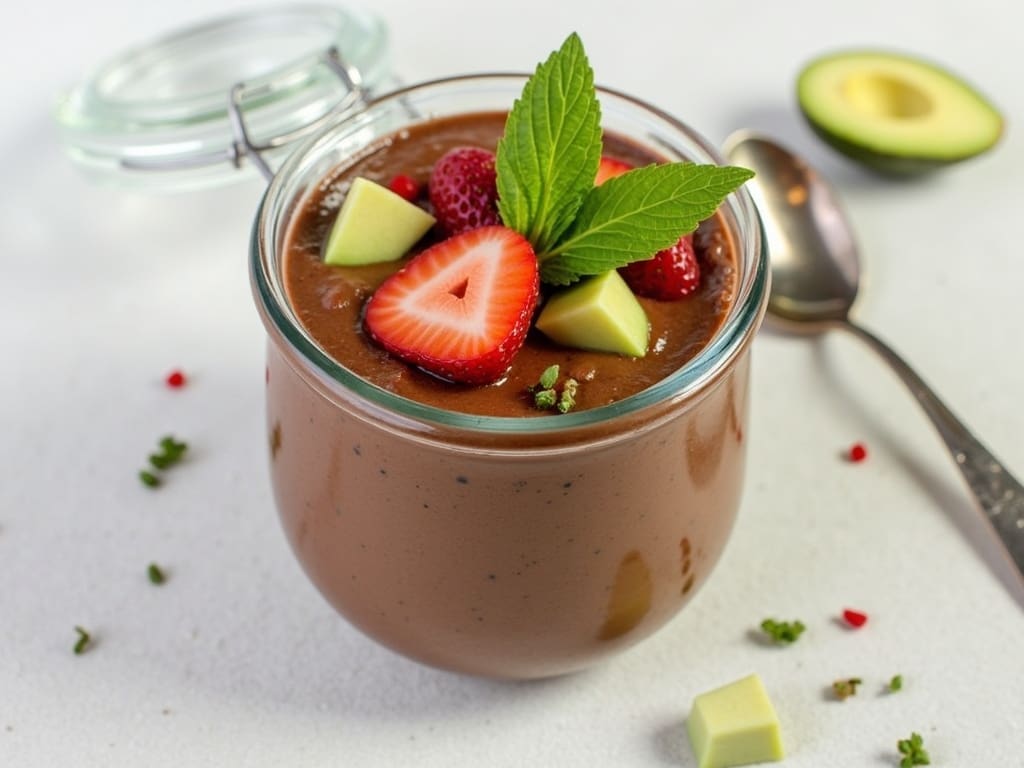
Many asked for a decadent dessert that’s both keto-friendly and irresistibly rich. Try my Keto Chocolate Avocado Mousse—a luscious, creamy treat that delivers a chocolate fix without derailing your low-carb lifestyle with only 5 net carbs!
This dessert blends ripe avocados with unsweetened cocoa, a keto-approved sweetener, and full-fat coconut milk to create a silk-smooth mousse. The natural creaminess of avocado paired with the deep cocoa flavor makes each spoonful both satisfying and guilt-free. Plus, it’s quick to whip up, making it the perfect dessert for weeknight indulgence or an impressive finish for dinner parties.
Optional: A dab of unsweetened whipped cream and a few raspberries or mint leaves for garnish
Instructions:
Blend the Base: Place the avocado flesh in a food processor and blend until completely smooth.
Mix Flavors: Add the unsweetened cocoa powder, keto sweetener, coconut milk, vanilla extract, and a pinch of salt to the puree. Blend again until the mixture is creamy and thoroughly combined.
Taste and Adjust: Give the mousse a quick taste; adjust sweetness or cocoa intensity if needed.
Chill: Spoon the mousse into serving bowls and refrigerate for at least 1 hour to let the flavors meld and the texture firm up.
Garnish and Serve: Before serving, add a dollop of whipped cream and garnish with fresh raspberries or mint leaves if desired.
Imagine savoring each bite of this velvety keto chocolate mousse, where the richness of chocolate meets the subtle, buttery flavor of avocado. Its smooth, satisfying texture and balanced sweetness will make dessert time the highlight of your day. Even on a strict keto regimen, you get to enjoy the luxury of dessert without compromise. Healthily indulge your sweet tooth by trying this Keto Chocolate Avocado Mousse today! Whip up a batch, impress your friends, and treat yourself to a dessert that’s as nourishing as it is decadent.
Nutritional Facts (Estimated per Serving—Recipe yields 4 servings):
Nutrient
Amount per Serving
Calories
~300 kcal
Total Fat
~24 g
• Saturated Fat
~5 g
Total Carbohydrates
~12 g
• Dietary Fiber
~7 g
• Net Carbs
~5 g
Protein
~3 g
Indulge in the rich and creamy goodness of this luscious Keto Chocolate Avocado Mousse, a decadent dessert that is sure to satisfy your sweet tooth while staying true to your low-carb lifestyle. Made with wholesome ingredients like avocados and cocoa powder, this dessert is not only delicious but also packed with nutrients, healthy fats, and antioxidants.
Avocados are a great source of monounsaturated fats, fiber, vitamins, and minerals, making them a perfect addition to any diet. In this recipe, the avocados provide a velvety smooth texture to the mousse, adding a luxurious feel to each bite. The cocoa powder brings in a rich chocolate flavor that will leave you craving more.
With only 300 calories per serving and low net carbs, this Chocolate Avocado Mousse is an ideal guilt-free treat for anyone looking to enjoy a sweet dessert without straying from their low-carb goals. Whether you are following a ketogenic diet or simply trying to reduce your sugar intake, this recipe is a delicious way to satisfy your cravings while staying on track.
This dessert is straightforward to make, requiring just a few basic ingredients and minimal effort. Simply blend together ripe avocados, cocoa powder, sweetener of choice, vanilla extract, and a pinch of salt until smooth and creamy. Chill in the refrigerator for a few hours to allow the flavors to meld together, then top with your favorite toppings such as whipped cream, nuts, or berries before serving.
So, treat yourself to a bowl of this heavenly Chocolate Avocado Mousse and savor every spoonful of this delightful symphony of flavors. It’s the perfect way to end a meal or indulge in a nourishing and delicious dessert without any guilt. Enjoy the decadence of chocolate without compromising your health goals with this delectable Keto Chocolate Avocado Mousse.
Enjoy this delicious, low-carb bread, perfect for sandwiches or as a side to any meal. It has 2g of net carbs per slice. Crafted with almond flour and a boost of psyllium husk powder for structure, this recipe gives you a loaf with a hearty texture and delightful nutty flavor—all while keeping your net carb count in check.
Below is a detailed recipe, complete with nutritional facts and exact quantities, to guide you every step of the way.
Sesame or Poppy Seeds: 1-2 tablespoons (for topping)
Step-by-Step Instructions
1. Preheat and Prepare
Preheat Oven:
Set your oven to 350°F (175°C).
Prepare the Pan:
Grease a standard 8.5″ × 4.5″ loaf pan with olive oil or line it with parchment paper for easy removal.
2. Mix the Dry Ingredients
Combine Ingredients:
In a large bowl, whisk together 2 cups almond flour, 3 tablespoons psyllium husk powder, 1 teaspoon baking powder, and ½ teaspoon salt.
Optional Flavor Boost:
If using herbs, stir them into the dry mix for a fragrant twist.
3. Blend the Wet Ingredients
Beat the Eggs:
In a separate bowl, lightly beat 4 large eggs until frothy.
Incorporate Fats:
Mix in 2 tablespoons of olive oil (or melted butter) until fully combined.
Add Boiling Water:
Carefully stir in 1 cucup ofoiling water. The hot water helps “activate” the psyllium husk, giving the dough a better structure and improved elasticity.
4. Combine and Rest the Dough
Mix Together:
Pour the wet ingredients into the dry ingredients. Stir with a spatula or wooden spoon until a thick, uniform dough forms.
Let It Rest:
Allow the dough to sit for 5 minutes. This resting period lets the psyllium husk absorb the water and expand, which is key to achieving a cohesive, sliceable loaf.
5. Shape, Bake, and Cool
Transfer to Pan:
Spoon the dough into your prepared loaf pan, using a spatula to smooth and level the top.
Optional Topping:
Sprinkle sesame or poppy seeds over the top for a pleasant crunch and extra flavor.
Bake:
Place the pan in your preheated oven and bake for 50–60 minutes. The bread is done when the top is firm and a toothpick inserted into the center comes out clean.
Cool Down:
Remove from the oven and let the bread cool in the pan for 10 minutes before transferring to a wire rack. Cooling the bread prevents it from becoming gummy and ensures perfect slicing.
Nutrition Facts for this Low-Carb Bread Recipe (Per Slice)
Based on a loaf divided into 10 equal slices. Values are approximate and may vary with ingredient brands.
Nutrient
Amount per Slice
Calories
180 kcal
Total Fat
15 g
Saturated Fat
3 g
Cholesterol
60 mg
Total Carbohydrates
8 g
Dietary Fiber
6 g
Net Carbohydrates
2 g
Protein
7 g
Note: These nutritional estimates for this low-carb bread recipe account for the natural variations found in almond flour and eggs. Adjustments such as using butter instead of olive oil or adding seeds may slightly change the nutritional profile.
Tips and Variations of this Low-Carb Bread Recipe
Extra Moisture: If you prefer a slightly moister bread, try adding an extra egg or a splash of unsweetened almond milk.
Texture Adjustment: For a lighter texture, sift the almond flour before mixing; this can help prevent a dense final product.
Flavor Enhancements: Mix in a teaspoon of dried herbs or a pinch of garlic powder for a savory twist, or add a tablespoon of sweetener (like erythritol) and cinnamon for a subtly sweet variant.
Storage: Store the cooled bread in an airtight container in the refrigerator for up to 5 days. It also freezes well; simply slice and toast as needed.
Final Thoughts
This low-carb bread recipe is an ideal solution for anyone looking to enjoy a slice of freshly baked bread without the guilt of high-carb ingredients. With a blend of almond flour and psyllium husk powder, it provides a sturdy structure and an appealing nutty flavor—all while keeping net carbs extremely low. The integration of boiling water helps activate and thicken the dough, ensuring every slice comes out perfectly.
Whether you’re using it for keto sandwiches or as a side at mealtime, this bread is a versatile addition to any low-carb diet. The comprehensive nutritional breakdown helps you track your macros while allowing you to indulge in a delicious, homemade treat.
Summary
Ingredients: Precise measurements include almond flour, psyllium husk powder, eggs, and boiling water—all contributing to a low-carb, protein-rich loaf.
Preparation: Detailed instructions guide you from mixing to resting, shaping, and baking for a perfect rise and texture.
Nutrition: Each slice (from a 10-slice loaf) contains roughly 180 kcal, 15 g fat, 8 g carbs (with 6 g fiber), and 7 g protein, making it a smart choice for low-carb living.
Enjoy this wholesome and satisfying low-carb bread recipe and let it become a staple in your healthy eating repertoire
Several of my readers asked for an honest review of The Complete Ketogenic Diet for Beginners by Amy Ramos as the price seems low at less than $7 for the paper back version..
The Complete Ketogenic Diet for Beginners distinguishes itself from other ketogenic guides in several important ways. Here is an in-depth comparative analysis using specific features, strengths, and potential drawbacks relative to popular keto books like Simply Keto by Suzanne Ryan, The Easy 5-Ingredient Ketogenic Diet Cookbook by Jen Fisch, and The Wholesome Yum Easy Keto Cookbook by Maya Krampf:
Core Comparison Table
Feature
The Complete Ketogenic Diet for Beginners
Simply Keto / Ryan
Easy 5-Ingredient Keto / Fisch
Wholesome Yum Easy Keto / Krampf
Experience Level
Perfect for absolute beginners
Beginner/Intermediate
Beginner/Busy
Beginner/Intermediate
Intro to Keto & Science
Strong, basic, friendly
Personal narrative + basic science
Quick guide
Moderate depth
Recipes (count/focus)
75, balanced meals
100+, varied
125+, ultra-simple ingredients
100+, quick, simple
Meal Plans Included
14-day meal plan + shopping lists
30-day meal plan
No (single meals focus)
No (but some meal ideas)
Macros/Nutrition Included
Yes – all recipes
Yes
Yes
Yes
Preparing for Keto
Grocery lists, food swaps, kitchen tips
Yes, less detailed
Minimal (focus on recipes)
Moderate
Photography & Design
Minimal but clear
Heavy, full-color
Moderate, simple
Professional and modern
Extra Features
Simple explanations, food charts
Many transformation stories
Cheat sheets for quick ref
Focus on low-prep recipes
Price Point
Very affordable
Moderate/High
Affordable
Moderate
Highlights of The Complete Ketogenic Diet for Beginners
Simplicity & Beginner-Focused: This guide is structured for readers brand new to keto, with clear and concise explanations, visual macros charts, and straightforward recipes that take 30 minutes or less. It avoids jargon and overwhelming technical data, which some other guides include for advanced users.
Practical Tools: Few other books provide a full 14-day meal plan paired with detailed shopping lists, which takes the guesswork out of grocery trips and daily meal prepping. This is a significant edge for those who crave structure when starting out. The Complete Ketogenic Diet for Beginners: Your Essential ….
Recipe Accessibility: The recipes use commonly available ingredients and include nutritional breakdowns for each, streamlining the diet-tracking process. The book covers a wide range of categories: breakfasts, snacks, dinners, sides, desserts, and even pantry staples. The Complete Ketogenic Diet for Beginners: Your Essential ….
Affordability: Priced lower than many trending keto guides, it’s accessible for readers who want to try keto without a big investment—ideal for those just starting out.
Where Other Guides May Excel
Photography & Visual Appeal: Books like Simply Keto and Wholesome Yum Easy Keto Cookbook offer extensive food photography, which some readers find more inspiring and motivating for meal creation.
Advanced/Personal Content: Simply Keto includes personal transformation stories and more background, which can resonate with readers looking for motivation or a sense of community.
Ultra-Simplicity via Ingredient Count: The Easy 5-Ingredient Ketogenic Diet Cookbook is targeted at busy people who want each dish to only require five main ingredients. This can be even more appealing for extremely time-pressed individuals.
Flexible Planning: While The Complete Ketogenic Diet for Beginners excels in structure, the more advanced or longer plans in Simply Keto cater to people ready for deeper commitment (offering a 30-day plan versus 14 days).
Customization: Some advanced guides allow more individual tailoring (custom meal planning, troubleshooting for advanced plateaus, etc.).
User Feedback Highlights
Ease of Use: Readers consistently note that Amy Ramos’s guide makes “going keto” feel possible, citing the beginner-friendly language and support tools as high points.
Consistency of Results: Many users successfully launch their keto journey with this book, but may later “graduate” to more complex or gourmet cookbooks as their skills and interest deepen.
Potential Drawbacks: Some report that the meal plans and shopping lists could be better aligned for families or those scaling up portions. The lack of full-color photos may be a negative for visual learners.
Photography, advanced science, customization, family planning
Biggest Drawback
Less advanced/visual, fewer gourmet recipes
Complexity/price/lack of structure in some
Overall Value
Excellent for starting and sustaining first month
Excellent as follow-up or upgrade as keto habits set in
In summary:
The Complete Ketogenic Diet for Beginners is the most approachable, practical, and cost-effective keto guide for those starting their low-carb journey. Unlike some rivals, it provides structure and actionable steps, not just recipes, making the transition into keto smoother and less intimidating. Readers looking for depth, gourmet recipes, or personal transformation stories may find other guides more useful in the long run, but as an entry point, Ramos’s guide is among the best in its class.
Additionally, the guide emphasizes simplicity and practicality in a way that resonates with beginners. It stands out by offering clear explanations and easy-to-follow guidelines that are especially beneficial for newcomers to the ketogenic diet. The straightforward approach and user-friendly layout of the book have received positive feedback, particularly from individuals who appreciate a no-nonsense guide to kickstarting their keto journey.
Ready to treat your taste buds to a luxurious seafood delight? This Crab Salad in Avocado Boats recipe transforms ordinary ingredients into an eye-catching, flavor-packed dish—perfect for impressing guests or treating yourself to a gourmet lunch!
Ingredients
1/3 cup finely chopped red onion
3 tablespoons mayonnaise
1/2 teaspoon Thai-style hot sauce (e.g., Sriracha)
2 tablespoons chopped fresh cilantro
3 teaspoons fresh lime juice (2 tsp for the salad, 1 tsp for the avocado)
1/2 teaspoon ground cumin
1/2 teaspoon lime zest
8 ounces of lump crab meat
1 ripe large avocado, halved and pitted
Salt and pepper, to taste
Lime wedges for serving
Crab SaladInstructions
Mix the Magic: In a medium bowl, stir together the red onion, mayonnaise, hot sauce, cilantro, 2 teaspoons of lime juice, cumin, and lime zest until well combined.
Fold in the Seafood: Gently blend in the crab meat and season with salt and pepper to suit your taste.
Avocado Prep: Lightly brush each half of the avocado with the remaining 1 teaspoon of lime juice. This not only adds brightness but also keeps the avocado beautifully vibrant.
Assemble and Serve: Spoon the luxurious crab salad generously onto each avocado half. Finish with a side of lime wedges and get ready to enjoy a dish that is as delightful to look at as it is to savor!
Crab Salad Nutritional Facts (Estimated per Serving—Recipe yields 2 servings)
Nutrient
Amount per Serving
Calories
~410 kcal
Protein
~22 g
Total Fat
~29.5 g
• Saturated
~5–7 g
Carbohydrates
~10 g
• Dietary Fiber
~6.5 g
Sugars
~2 g
Notes on Calculation:
Mayonnaise: Assumed at ~90 calories per tablespoon (total ~270 calories).
Crab Meat: Estimated at ~200 calories for 8 ounces with a protein boost of about 40 g (split evenly between servings).
Avocado: A large avocado is roughly 322 calories and is rich in healthy fats and fiber.
Additional ingredients such as red onion, hot sauce, lime juice, cilantro, and spices contribute minimally to the overall calorie count.
Don’t wait! Grab your ingredients and prepare this gourmet creation today. Your plate—and your taste buds—are in for a treat. Happy cooking!
Summary: This recipe transforms simple ingredients into an elegant crab salad served in avocado halves. With its fresh, zesty flavors and nutrient-rich profile (about 410 calories per serving, 22 g protein, and 29.5 g fat), it’s perfect for a quick gourmet meal. Enjoy the culinary adventure and impress both friends and family!
Low carb diets have lately attracted considerable popularity since they help control blood sugar and induce weight loss. Those who choose to follow this kind of diet in 2025 have to first be aware of the several types, such as ketogenic or Atkins. A balanced dinner can call for non-starchy veggies like broccoli and zucchini, proteins like chicken and fish, and beneficial fats from avocados or almonds. It’s equally important to reduce high-carb foods like bread and sugary snacks even as you’re browsing intriguing low-carb dishes. Monitoring daily carb intake with a diary or an app helps people make sensible decisions that match their way of life.
First, Let’s Understand Low Carb Diets
Low-carb diets are eating regimens stressing proteins and good fats while limiting carbohydrate intake. The idea is to replace burn fat for the primary energy source in the body, therefore reducing its need on sugar. These diets have quite diverse carbohydrate limits and food choices.
Usually ranging from 20 to 50 grams, the ketogenic diet is one popular version whereby people take less than 5-10% of their daily calories from carbohydrates. This drastic reduction puts the body in a state of ketosis, where it efficiently burns fat for fuel. Beginning with a very low daily carb intake of about 20 grams, the Atkins diet gradually increases carbs as the person passes phases of the program.
Starting with a significant reduction in carbohydrates, the South Beach diet stresses lean proteins and good fats above all else. The Paleo diet avoids processed foods completely and advocates whole meals that approximate what our ancestors would have eaten, so following a different path. Finally, designed in phases that enable people to accomplish their weight loss targets, the Dukan diet is low in fat and heavy in protein.
Knowing these several low carb diets will enable people to choose the one most suitable for their objectives about lifestyle and health.
Health Benefits of a Low Carb Diet
Low carb diets attract many people because of its several health benefits. Among the most significant advantages is loss of weight. Particularly in the beginning stages of the diet, the body turns to burning fat for fuel by reducing carbohydrate intake, which can lead to fast weight reduction. Low carb diets particularly benefit people with type 2 diabetes or insulin resistance since this changes in metabolism helps to control blood sugar levels.
Low carb diets also might improve heart function. Studies show that by increasing HDL (good) cholesterol and reducing triglycerides, they can lower cholesterol overall. This change in lipid profile helps to lower the heart disease risk.
Those on low carb diets sometimes report less sugar cravings, which would help to control meals and cut snacking. The higher intake of proteins and good fats can induce a sensation of fullness, which lowers general calorie intake. A supper of grilled chicken with non-starchy veggies, for example, can keep you full longer than a high-carb lunch, so preventing the frequent fast energy crashes sometimes associated with a diet heavy in carbohydrates.
Many people also discover that low carb diets boost their general mental clarity and energy level. Many people claim to have more constant energy throughout the day as the body adjusts to utilizing fat for fuel, so avoiding the highs and lows connected with carbohydrate intake.
Looking at it, adopting a low carb diet can produce weight loss, better blood sugar control, heart health improvement, and increased satiety—all of which would make it a reasonable choice for everyone looking to elevate their general health.
Foods Your Low Carb Diet Should Feature
Starting a low carb diet calls for knowing which foods to include for a balanced and fulfilling eating schedule. Beginning with premium proteins like meat, chicken, and fish, excellent options with vital nutrients and helping to keep you full are beef, chicken, and fatty seafood like salmon. Also a flexible protein source with various possible cooking methods are eggs.
Then give non-starchy vegetables top priority. Low in carbohydrates but high in fiber, vitamins, and minerals are leafy greens including spinach and kale as well as cruciferous vegetables like broccoli and cauliflower. Another excellent choice, ideal for spiralizing into noodles or adding to stir-fries is zucchini.
In a low carb diet, healthy fats are really vital since they give you energy and satisfy you. Add foods high in avocados, olive oil, and nuts. Additionally included are cheese and full-fat dairy products, which give your dishes taste and richness.
Lower-carb fruits are an excellent option for a little sweetener without adding too much carbohydrates. Moderately consumed berries, cherries, and apples provide antioxidants and minerals while maintaining modest carbohydrate levels.
At last, consider eating in moderation starchy foods as sweet potatoes, lentils, and quinoa. These provide essential nutrients and energy even if they help you to keep your total carbohydrate intake under control—especially if you are active.
Examples:
Category
Examples
Proteins
Meat (beef, pork, chicken), fish (salmon, tuna), eggs
A low carb diet requires you to limit or avoid several things that can impede your advancement. The most major offenders are high-carb foods; among them are bread, pasta, and rice, which can rapidly pile up in carbohydrate count.
Eliminating soft drinks, sugar-filled snacks, and other sweetened liquids will help to lower blood sugar levels and have little nutritional worth. White rice and white bread, among refined grains, are less appealing since they lack fiber and minerals.
At last, think about eating in moderation starchy foods as quinoa, sweet potatoes, and lentils. These provide most of the minerals and vitality while helping you to reduce your overall carb intake—especially if you are active.
Sugary foods (candies, desserts, sodas)
Bread and pasta (including whole grain)
Starchy vegetables (potatoes, corn, peas)
Certain fruits (bananas, grapes, cherries)
Rice and grains (quinoa, barley, bulgur)
Legumes (beans, lentils, chickpeas)
Processed snacks (chips, crackers, baked goods)
Low Carb Diet Meal Planning
Following a low carb diet effectively requires meal preparation. First, figure out your daily carbohydrate limit; usually advised to be fewer than 50 grams. This guarantees you still enjoy your meals and helps control your intake. Your decisions might be guided by a three-day menu sample (see below).
There are plenty of healthy choices; important snacks are also Greek yogurt, a piece of fruit, or a handful of nuts. When dining out, consider meat-based main meals and ask for extra vegetables rather than starchy sides. Maintaining your carb limit and making any changes along the road depends on recording your meals—probably using a food journal or an app.
Good Example of a 3-Day Low-Carb Menu
First Day:
Start your morning with two slices of Ezekiel bread topped with mashed avocado for good fiber and fats.
For lunch: Appreciate grilled chicken served over zucchini noodles, which provides a satisfying, low-carb alternative to pasta.
Dinner can be a beef burger (lean) covered with cooked or steamed vegetables.
Second Day:
Breakfast can be Greek yogurt topped with fresh blueberries and almonds for extra crunch and nutrition.
Lunch: Have a hearty rib-eye roast with rutabaga mash (low-carb substitute for mashed potatoes).
Dinner: Savor baked or grilled salmon with a side of roasted asparagus, rich in vitamins and fiber.
Third Day:
Breakfast: Hard-boiled eggs, served with sliced tomato and avocado for a balanced start.
Lunch: A refreshing shrimp salad drizzled with olive oil dressing, perfect for a light yet filling meal.
Dinner: End the day with grilled chicken, complemented by Brussels sprouts and a small serving of quinoa for a nutritious boost.
Good Low Carb Snacking Ideas
Low-carb diets don’t have to be monotonous or restrictive for snacking. Many delicious and filling foods help you control your carbohydrate intake. Greek yogurt is a common option since it is high in protein and may be topped with a few berries to provide taste without adding too many carbohydrates. Another excellent substitute are nuts and seeds; although almonds, walnuts, and sunflower seeds offer rich lipids and protein, be careful of portion proportions since they may rapidly add up.
For a fresh, filling snack toss veggies including bell pepper strips, cucumbers slices, or baby carrots with hummus or guacamole. Cheese sticks or slices are also a quick and great way with protein and fat to keep you satisfied.
If you’re in the mood for something sweet, choose a low-carb protein bar fit for your nutritional needs or some small piece of dark chocolate (70% cocoa or higher). Hard-boiled eggs are another quick snack high in protein that will keep you full until your next meal. You still have wonderful snacks and these decisions assist you to stay to your low carb goals.
Dining Out on a Low Carb Diet
Following a low carb diet and dining out may be fun and simple if you make few wise decisions. Look first for places with a selection of meat-based cuisine, such shellfish or steak houses. Usually offering rich protein sources low in carbohydrates, these locations Order extra veggies rather than starchy sides like rice or potatoes. If you decide on a grilled salmon, for instance, ask for a mixed green salad or sautéed spinach instead of mashed potatoes on a side.
One also benefits from thinking through the sauces and dressings. Requesting many sauces on the side is wise as many of them might be heavy in sugar and carbohydrates. This helps you to regulate your usage, or even to completely skip them. For salads, also look for substitutes including olive oil and vinegar as they are low in carbohydrates and give taste without the extra sweets.
About appetisers, replace a cheese platter or prawn cocktail with fried dishes or chips. Consider split a low-carb meal or selecting berries with cream if you want a sweet treat for dessert. Making these choices can/will help you stay on a low-carb diet and yet enjoy dining out.
Monitoring and Adjusting Your Low-Carb Diet
Reaching your health targets needs some close attention of your low-carb diet. Either keep a food diary or use tools like MyFitnessPal to track your daily carb intake. it helps you to know what you eat and how it supports your objective. See medical experts; particularly if you have diabetes, this is vital. They can offer customised recommendations depending on your medical requirements.
As you advance, notice how your body reacts. You can be decreasing carbohydrates too low if you feel tired or sick. Make adjustments by slightly increasing your carb intake with healthy options like starchy vegetables or whole grains. Balance is key; ensure you’re getting enough protein, healthy fats, and fiber-rich foods to keep you satisfied and energized.
Review your food choices and objectives often. What works first could need adjusting as your body adjusts or your way of life evolves. Remember, the goal is not only to cut carbs but also to create a sustainable and pleasurable eating plan that supports your general health.
10. Final Considerations for a Sustainable Low Carb Diet
To maintain a sustainable low carb diet, it’s essential to prioritize balance in your meals. Incorporate a mix of proteins, healthy fats, and fiber-rich foods, as this combination helps keep you full and satisfied. Instead of viewing carbs as the enemy, focus on quality. Choose whole, unprocessed foods and be mindful of portion sizes to avoid overeating.
Incorporating variety is also crucial. Look for new recipes that excite your palate and introduce different low-carb ingredients. For instance, try cauliflower rice instead of traditional rice or make zucchini lasagna for a comforting meal without the carbs.
It’s important to listen to your body. If you feel fatigued or unwell on a low carb diet, consider adjusting your carb intake or the types of foods you’re eating. Ensuring you’re getting enough nutrients is vital for long-term success.
Lastly, remember that this lifestyle should be enjoyable. Allow yourself the occasional treat within your carb limits, and don’t stress too much about every bite. The goal is to cultivate a way of eating that you can see yourself maintaining for years to come.
Frequently Asked Questions
1. What is a low carb diet and how does it work?
A low carb diet focuses on reducing the amount of carbohydrates you eat, like bread and pasta, and increasing protein and healthy fats. This change can help your body burn fat for energy instead of sugar.
2. What foods can I eat on a low carb diet?
On a low carb diet, you can eat meats, fish, eggs, vegetables, nuts, seeds, and healthy fats like olive oil. You should avoid sugary foods and refined carbs.
3. Can I still enjoy snacks while on a low carb diet?
Yes, you can enjoy snacks! Good options include cheese, nuts, yogurt, or veggie sticks with dip. Just make sure they are low in carbohydrates.
4. Is a low carb diet suitable for everyone?
While many people can benefit from a low carb diet, it’s important to consult with a healthcare professional before starting, especially if you have underlying health conditions.
5. How can I stay motivated on a low carb diet?
To stay motivated, set small goals, keep track of your progress, and try new low carb recipes to keep meals exciting. Joining a community or support group can also help.
TL;DR A Comprehensive Low Carb Diet Plan for 2025 provides an overview of low carb diets, highlighting their types, health benefits, and food choices. It emphasizes proteins, non-starchy vegetables, healthy fats, and lower-carb fruits while advising against high-carb and processed foods. The post includes meal planning tips, a sample 3-day menu, healthy snacking options, dining out strategies, and the importance of monitoring intake. It concludes with considerations for sustainable eating habits, encouraging a balanced approach to nutrition.
Are you ready to light up your grill and transform your dinner routine into a gourmet feast? This Cedar-Planked Salmon with Mustard Dill Sauce delivers smoky, zesty elegance in every bite—perfect for impressing friends and savoring a restaurant-quality meal at home.
Our recipe features succulent salmon fillets enhanced by a vibrant blend of olive oil, lemon zest, and Dijon mustard. The cedar plank infuses a subtle smokiness that harmonizes with the tangy, herb-infused mustard dill sauce, boasting fresh chives, dill, and a juicy squeeze of lemon. Every element is selected to enhance flavor while keeping the dish simple, light, and irresistibly tasty.
Ingredients:
For the Salmon:
4 salmon fillets (about 1 lb total)
2 tablespoons olive oil
1 teaspoon grated lemon rind
2 tablespoons fresh lemon juice
1 tablespoon chopped fresh chives (or green onion)
Two 12″ x 7″ untreated cedar planks (soaked in water for at least 30 minutes to 24 hours)
Cedar-Planked Salmon Instructions:
Prep the Planks & Salmon: Soak the cedar planks thoroughly. Once ready, place your salmon fillets on top. In a small bowl, whisk together olive oil, lemon rind, lemon juice, chives, Dijon mustard, salt, and pepper.
Season the Salmon: Brush the salmon generously with the lemon-mustard mixture to infuse every bite with zest.
Grill to Perfection: Place the planks on your grill over medium-high heat. Close the lid and cook for about 20 minutes, basting with extra lemon mixture halfway through, or until the salmon flakes easily with a fork.
Create the Dill Sauce: While the salmon grills combine the sour cream, chopped cucumber, dill, chives, salt, and pepper in a small bowl.
Serve: Arrange the cedar planks on a platter and drizzle or serve alongside the mustard dill sauce for a delightful dipping experience.
Imagine cutting into a perfectly grilled cedar-planked salmon fillet, its natural flavors elevated by a hint of cedar and a burst of citrusy-mustard glaze. The creamy dill sauce balances the smokiness with a refreshing tang, making every bite a celebration of flavors. This dish isn’t just a meal—it’s a culinary adventure that brings sophistication and mouthwatering delight right to your dinner table.
Fire up your grill and get those cedar planks soaking because you are in for a culinary treat that will tantalize your taste buds and impress your dinner guests. Cedar plank grilling is a method that infuses your food with a rich, smoky flavor that can’t be replicated by any other cooking technique. The cedar planks themselves impart a unique aroma to the food, enhancing the overall dining experience.
Nutritional Facts (Estimated per Serving – Recipe yields 4 servings):
Nutrient
Amount per Serving
Calories
~404 kcal
Protein
~26 g
Total Fat
~31 g
• Saturated Fat
~6-8 g
Carbohydrates
~2 g
• Sugars
~1 g
Calculations are based on approximate values:
Salmon Fillets: Each 4‑oz fillet provides around 233 calories, 25 g protein, and 13 g fat.
Olive Oil: 2 tablespoons add roughly 240 calories and 28 g fat (divided equally among servings).
Sour Cream: 1 cup of full‑fat sour cream contributes about 445 calories and around 44 g fat (divided among 4 servings).
Summary: This Cedar-Planked Salmon with Mustard Dill Sauce is a show-stopping dish featuring smoky, perfectly grilled salmon enhanced with a zesty, herbaceous marinade and a cooling, creamy sauce. With approximately 404 calories, 26 g protein, and a deliciously balanced fat content per serving, it delivers gourmet flavors in every bite. Get grilling and let your dinner shine!
Smoothies are a delicious way to support weight loss, filled with vitamins and minerals. Health coaches recommend trying different combinations to find your favorite, like these 15 quick and easy smoothie recipes for weight loss. These Easy Smoothie Recipes for Weight Loss are designed to help you achieve your goals while enjoying tasty drinks.
For instance, the Raspberry Oat Smoothie combines kefir, frozen raspberries, and rolled oats for a filling treat. The Apple Spice Smoothie features Greek yogurt and warm spices like cinnamon and nutmeg if you prefer something spicier. The Pineapple Avocado Smoothie is another refreshing option that blends coconut water with avocados for creaminess. With easy instructions for each recipe, these Easy Smoothie Recipes for Weight Loss make it simple to create healthy snacks that taste great while helping you achieve your weight loss goals!
1. Raspberry Oat Smoothie
These Easy Smoothie Recipes for Weight Loss are ideal for anyone looking to enjoy nutritious and satisfying drinks.
The Raspberry Oat Smoothie is a nutritious choice for those looking to shed some pounds while enjoying a delicious drink. To make this smoothie, you’ll need 1 cup of kefir, which is great for gut health, and 1 cup of frozen raspberries, packed with antioxidants and fiber. Adding 1/4 cup of raw rolled oats not only gives the smoothie a creamy texture but also provides a good source of complex carbohydrates that can keep you feeling full longer. For a delightful hint of chocolate, include a CocoaVia Unsweetened Dark Chocolate stick pack and, if you like a touch of sweetness, add 1 teaspoon of honey. Simply blend all the ingredients until smooth, and you have a refreshing smoothie that supports your weight loss journey.
2. Apple Spice Smoothie
The Apple Spice Smoothie is a delicious blend that not only satisfies your taste buds but also helps with weight loss. To make this smoothie, you’ll need one quartered apple, three-quarters of a cup of Greek yogurt, and a mix of spices including cinnamon, cardamom, and nutmeg. These spices add a warm flavor and can help boost your metabolism. Combine this with three-quarters of a cup of unsweetened almond milk, half a tablespoon of honey for sweetness, and a scoop of vanilla protein powder for an extra protein kick. Simply blend all the ingredients until smooth, and you have a creamy, nutritious drink that can be enjoyed any time of the day. This smoothie is rich in fiber from the apple and protein from the yogurt, keeping you feeling full longer and supporting your weight loss goals. Plus, the spices not only enhance flavor but also provide health benefits, making this smoothie a smart choice for your diet.
3. Pineapple Avocado Smoothie
The Pineapple Avocado Smoothie is a tropical delight packed with nutrients that support weight loss. This smoothie combines the creamy texture of avocado with the sweetness of pineapple, making it both delicious and filling. Avocado provides healthy fats that keep you satisfied, while pineapple adds a refreshing zing and is rich in vitamin C. The addition of spinach boosts the nutrient profile without altering the flavor significantly. Ginger adds a spicy kick and may aid digestion, while hemp seeds provide a protein boost. To prepare, simply blend all the ingredients—5 ice cubes, a handful of spinach, 1/2 avocado (peeled), 1/2 banana, 1 inch of ginger (peeled), a drop of liquid stevia, 1 teaspoon of hemp seeds, 1 cup of pineapple, and 1 1/2 cups of coconut water—until smooth. This smoothie is not only quick to make but also a great way to start your day or refuel after a workout.
4. Green Giant Smoothie
The Green Giant Smoothie is a powerhouse of nutrients, perfect for anyone looking to shed some pounds while enjoying a refreshing drink. This smoothie combines the goodness of leafy greens and fruits, making it both delicious and healthy. To make it, blend together 1 cup of your choice of almond, rice, or soy milk, 2 leaves of kale for a boost of vitamins A and K, half a green apple for natural sweetness, a 3-inch piece of cucumber for hydration, half an avocado for healthy fats, and a kiwi fruit to add a zesty flavor and vitamin C. This smoothie not only helps in weight loss by keeping you full but also supports your immune system and promotes healthy skin. Enjoy it in the morning for an energy kick or as a midday snack!
5. Orange Creamsicle Protein Shake
Incorporating Easy Smoothie Recipes for Weight Loss into your daily routine can help keep you on track with your health goals.
These Easy Smoothie Recipes for Weight Loss are packed with flavors that will satisfy your cravings.
The Orange Creamsicle Protein Shake is a delicious and refreshing option for those looking to lose weight without sacrificing flavor. This shake combines the tangy taste of orange juice with the creamy texture of almond milk and frozen banana, making it a delightful treat any time of day. To prepare, simply blend together 1/4 cup of fresh orange juice, 1/2 of a medium frozen banana, and 1/2 tablespoon of honey for added sweetness. Add in 1/2 cup of unsweetened almond milk and a scoop of vanilla whey protein to boost the protein content, which is essential for muscle recovery and satiety. Toss in 3-5 ice cubes to achieve a frosty texture, and blend until smooth. This shake not only satisfies your sweet tooth but also keeps you feeling full and energized, making it an ideal addition to your weight loss journey.
6. Smooth Skinny
The Smooth Skinny is a refreshing and hydrating smoothie that packs a nutritious punch while keeping calories in check. It combines the crispness of celery, the tartness of grapefruit, and the sweetness of banana and green apple. This blend not only offers a burst of flavor but also provides essential vitamins and minerals.
With these Easy Smoothie Recipes for Weight Loss, you can fuel your body while enjoying tasty options.
To prepare, start by adding 1 1/2 cups of water to your blender, which acts as a great base to keep the smoothie light. Then, toss in a large chard leaf or three small ones for added green goodness and fiber. Next, add a cored and stemmed green apple along with three stalks of celery for a crunchy texture and a touch of natural sweetness. The juice of one grapefruit enhances the tangy flavor while also boosting vitamin C, which is great for immunity.
Finally, a banana rounds out this smoothie, giving it a creamy consistency and a hint of sweetness. Once all ingredients are in the blender, blend until smooth, and enjoy this guilt-free treat that supports your weight loss journey!
7. Tomatillo Zinger
The Tomatillo Zinger is a refreshing and zesty smoothie that packs a punch of flavor while supporting your weight loss goals. This vibrant drink features tomatillos, which are rich in vitamins C and K, and are known for their tangy taste. Combined with fresh spinach, this smoothie offers a boost of iron and fiber, making it a great choice for a nutrient-dense snack. The addition of lime juice not only enhances the flavor but also provides a dose of antioxidants. For those who enjoy a little heat, a pinch of cayenne adds a spicy kick that can help boost metabolism. To prepare this smoothie, simply blend 1 1/2 oz of baby spinach, 2 roma plum tomatoes, 2 husked tomatillos, the juice of 1 lime, a pinch of cayenne, 1 cup of water, and 1 cup of ice until smooth. Enjoy this vibrant drink as a mid-morning pick-me-up or post-workout refreshment!
8. Strawberry Orange Spritzer
The Strawberry Orange Spritzer is a refreshing and zesty smoothie perfect for a weight loss journey. Combining the sweetness of strawberries with the vibrant citrus flavor of oranges, this smoothie is both delicious and nutritious. To make it, you’ll need 4 oz of mini peppers, 3 oz of strawberries, 1 peeled orange, 1 tablespoon of flaxseed, 1 cup of water, and 1 cup of ice. Blend all the ingredients until smooth, and you’ll have a drink that not only tastes great but also provides essential vitamins and healthy fats. Mini peppers add a unique twist, boosting the vitamin C content, while flaxseed contributes fiber and omega-3 fatty acids to keep you feeling full. This smoothie is ideal as a breakfast option or a mid-afternoon snack, making it easy to stay on track with your weight loss goals.
9. Blueberry Protein Smoothie
The Blueberry Protein Smoothie is a delicious and nutritious option for anyone looking to boost their weight loss journey. Made with organic blueberries, this smoothie is packed with antioxidants that help fight inflammation and support overall health. The addition of vanilla protein powder provides a protein boost, which is essential for muscle recovery and keeping you feeling full longer.
To prepare this smoothie, blend together 1/2 cup of organic blueberries, 1 scoop of vanilla protein, 1 tablespoon of almond butter for healthy fats, and 1 tablespoon of ground flax for added fiber. Pour in 1.5 cups of unsweetened almond milk for a creamy texture and finish off with a dash of cinnamon for extra flavor. This combination not only tastes great but also supports your weight loss goals by providing a balance of nutrients that keep you satisfied. Enjoy it as a quick breakfast or a post-workout snack!
10. Coffee Protein Smoothie
The Coffee Protein Smoothie is a perfect pick-me-up for those who love coffee and want to pack in some protein. This smoothie blends the rich flavors of coffee with the creaminess of coconut almond milk and the sweetness of frozen bananas. Start with 2 cups of ice, then add 3/4 cup of the coconut almond milk blend and 1 cup of cold decaf or regular coffee. The frozen banana chunks not only add a natural sweetness but also a smooth texture. For an added protein boost, mix in 2 tablespoons of PB2 peanut butter powder and a scoop of Raw Organic Fit Protein Chocolate Cacao Powder. Blend everything until smooth for a delicious and nutritious drink that can help you stay energized throughout the day while supporting your weight loss goals.
11. Super Berry Weight Loss Smoothie
The Super Berry Weight Loss Smoothie is a delicious blend of flavors that is both satisfying and nutritious. It combines unsweetened vanilla almond milk with a variety of frozen berries, ensuring a rich source of antioxidants while keeping the calorie count low. The addition of pea protein not only enhances the smoothie’s creamy texture but also boosts its protein content, making it a great choice for muscle recovery and satiety. To prepare, simply blend 1 cup of almond milk, 1/2 frozen banana, 1/2 cup of frozen strawberries, 1/2 cup of frozen blackberries, and 1 scoop of pea protein until smooth. This smoothie is perfect for breakfast or a post-workout snack, helping you stay on track with your weight loss goals while enjoying a burst of berry goodness.
1 cup mixed berries (strawberries, blueberries, raspberries)
1 banana
1 cup almond milk (or any preferred milk)
1 tablespoon chia seeds
1 tablespoon honey or agave syrup
1/2 cup spinach (optional for added nutrients)
Ice cubes as needed for desired consistency
12. Green Warrior Weight Loss Smoothie
The Green Warrior Weight Loss Smoothie is a powerhouse of nutrients designed to support your weight loss journey while tantalizing your taste buds. Packed with 3/4 cup of non-fat Greek yogurt, this smoothie offers a creamy texture and a dose of protein to keep you feeling full longer. The addition of 1/4 cup of pomegranate juice gives it a sweet and tangy flavor, along with antioxidants that help fight inflammation.
Green grapes and pineapple pieces add natural sweetness and tropical vibes, making this smoothie refreshing and enjoyable. Spinach, a low-calorie leafy green, is rich in iron and vitamins, contributing to overall health without adding excess calories. Fresh ginger adds a zing and is known for its digestive benefits, making this smoothie not only tasty but also gut-friendly.
To add a unique twist and crunch, include 1/8 cup of Wonderful No Shells Pistachios, which provide healthy fats and protein. The ice cubes help create a chilled, refreshing drink, perfect for any time of day. Simply blend all the ingredients until smooth, and you have a delicious drink that supports your weight loss goals while satisfying your cravings.
Elevate your smoothie game with these Easy Smoothie Recipes for Weight Loss.
13. Breakfast PB & Banana Smoothie
The Breakfast PB & Banana Smoothie is a perfect way to start your day with a burst of energy and nutrition. Packed with wholesome ingredients, this smoothie combines the creaminess of peanut butter with the natural sweetness of banana, making it both delicious and satisfying. To make this smoothie, you’ll need 1 cup of ice, 1 cup of almond milk (or any milk of your choice), 1/2 cup of oats for added fiber, 1 banana for natural sweetness, 1 tablespoon of peanut butter for protein and healthy fats, and a dash of cinnamon for flavor. Simply blend all the ingredients until smooth, and enjoy a nutritious breakfast that keeps you full and energized throughout the morning. This smoothie is not only great for weight loss but also a convenient option for those busy mornings when you need something quick and healthy.
14. Purple Mint Pick-Me-Up Smoothie
The Purple Mint Pick-Me-Up Smoothie is a refreshing blend that not only tastes great but also supports your weight loss goals. To make this smoothie, combine 1 cup of ice, 1 cup of almond milk (or any milk of your choice), 1 ripe banana, a handful of blueberries, and a handful of fresh mint leaves. The mint adds a unique flavor while also helping with digestion, making it a perfect choice for a post-workout snack or a mid-afternoon pick-me-up. Blend all the ingredients until smooth, and enjoy the vibrant color and refreshing taste. This smoothie is packed with antioxidants from the blueberries and provides natural sweetness from the banana, making it a delicious, guilt-free treat.
15. Tropical Green Smoothie
This Tropical Green Smoothie is a refreshing blend that is as vibrant as it is nutritious. It combines the sweetness of banana and mango with the earthy flavor of spinach, providing a host of vitamins and minerals. The coconut water adds a hydrating aspect, making it a perfect drink for warm days or post-workout recovery. Simply blend together 1 banana, 1/2 cup of mango, 1 cup of fresh spinach, 1 cup of coconut water, and 1 tablespoon of chia seeds until smooth. Chia seeds are a great source of omega-3 fatty acids and fiber, which can help keep you feeling full for longer. This smoothie not only supports weight loss but also boosts your energy levels, making it a great addition to your daily routine.
Don’t miss out on trying these Easy Smoothie Recipes for Weight Loss for a delicious treat.
Easy Smoothie Recipes for Weight Loss FAQ
1. What ingredients should I use for smoothies that help with weight loss?
Embrace the benefits of Easy Smoothie Recipes for Weight Loss as part of your healthy routine.
Discover how Easy Smoothie Recipes for Weight Loss can become a part of your lifestyle.
These Easy Smoothie Recipes for Weight Loss are perfect for any time of day, keeping you satisfied.
Use fruits, leafy greens, Greek yogurt, and water like coconut water. These are low in calories but high in nutrients.
2. How can I make my smoothies more filling to support weight loss?
Add protein sources like protein powder, nuts, or seeds, and include healthy fats like avocado or nut butter.
3. Can I replace a meal with a smoothie for weight loss?
Yes, but make sure your smoothie has enough calories and nutrients to keep you satisfied.
4. How often should I drink these smoothies for weight loss?
You can have them daily as part of a balanced diet, but don’t rely solely on smoothies for all your meals.
5. Is it better to use fresh or frozen fruits in weight loss smoothies?
Both are good! Frozen fruits can make your smoothies thicker and are often just as nutritious as fresh ones.
TL;DR Discover 15 delectable smoothie recipes designed for weight loss, featuring fresh ingredients like fruits, vegetables, and protein. These quick recipes include the Raspberry Oat Smoothie, Apple Spice Smoothie, and Tropical Green Smoothie, all easy to blend for a nutritious boost in your weight loss journey.
This dish transforms humble zucchini into a hearty keto zucchini pasta alternative that embraces the Keto diet’s low-carb, high-fat philosophy while still delivering a satisfying and flavorful meal with only 7g of carbs.
By combining fresh, spiralized zucchini with a rich, creamy pesto sauce, you get a dish that’s both visually delightful and mouthwateringly indulgent. Below, you’ll find every detail from quantities to nutrition facts, ensuring that you can confidently recreate this recipe in your kitchen.
Olive Oil: 1 tablespoon (for sautéing, optional for extra flavor)
For the Creamy Pesto Sauce:
Basil Leaves: 1 cup (packed)
Pine Nuts: 1/3 cup (approximately 50 g)
Garlic: 2 cloves, minced
Extra Virgin Olive Oil: 1/4 cup (4 tablespoons)
Heavy Cream: 1/2 cup (120 mL; use full-fat cream for extra richness)
Grated Parmesan Cheese: 1/4 cup (about 25 g)
Lemon Juice: 1 tablespoon (freshly squeezed for brightness)
Salt and Freshly Ground Black Pepper: To taste
Optional Garnishes:
Cherry Tomatoes: 1/2 cup, halved
Extra Parmesan Cheese: A sprinkle on top
Fresh Basil Leaves: A few for decorative flair
Step-by-Step Instructions
1. Prepare the Keto Zucchini Pasta
Spiralize the Zucchinis:
Using a spiralizer, turn your 4 medium zucchinis into noodles. You can also use a julienne peeler if you don’t have a spiralizer.
Salt and Drain:
Place the zucchini noodles in a colander, sprinkle with 1 teaspoon of salt, and let them sit for about 15 minutes.
This step helps draw out excess water, ensuring your pasta stays firm and not too watery.
Pat Dry:
Use paper towels to gently squeeze and pat down the zucchini noodles, removing as much moisture as possible.
2. Make the Creamy Pesto Sauce
Blend the Base:
In a food processor or high-speed blender, add 1 cup of basil leaves, 1/3 cup of pine nuts, and 2 cloves of minced garlic. Pulse until roughly chopped.
Add Olive Oil:
With the processor running, slowly drizzle in the 1/4 cup extra virgin olive oil until the mixture becomes a coarse paste.
Emulsify the Cream:
Transfer the basil mixture to a small saucepan over low heat. Stir in the 1/2 cup heavy cream and let it warm for about 2 minutes.
Add 1/4 cup grated Parmesan cheese and 1 tablespoon of lemon juice. Stir until the sauce is smooth and creamy.
Season:
Taste the sauce and season with salt and freshly ground black pepper to your preference.
Remove from heat once it reaches your desired consistency.
3. Combine Keto Zucchini Pasta and Sauce
Warm the Keto Zucchini Pasta:
Optionally, in a large skillet, add 1 tablespoon of olive oil over medium heat. Quickly sauté the zucchini noodles for 2-3 minutes just to warm them up (avoid overcooking to preserve their crunch).
Mix Together:
Pour the warm creamy pesto sauce over the zucchini noodles and gently toss until well incorporated.
Garnish and Serve:
If desired, sprinkle with cherry tomatoes, an extra pinch of Parmesan, and fresh basil leaves before serving.
4. Presentation Tips
Plate Effectively: Serve this dish in shallow bowls to highlight the colorful zucchini noodles and vibrant green sauce.
Add Texture: Consider adding toasted pine nuts or even a few slices of avocado on top for an extra dose of healthy fats.
Serve Warm: This recipe is best served immediately while the sauce is warm and the zucchini noodles maintain their bite.
Nutrition Facts (Per Serving)
(Based on 2 servings; estimated values)
Nutrient
Amount per Serving
Calories
~690 kcal
Total Fat
~62 g
Saturated Fat
~25 g
Cholesterol
~150 mg
Sodium
~350 mg
Total Carbohydrates
~10 g
Dietary Fiber
~3 g
Net Carbs
~7 g
Protein
~13 g
Note: These nutrition facts are approximate and will vary based on specific brands and ingredient sizes used. Adjustments in ingredients such as switching heavy cream for coconut cream or altering the amount of Parmesan can modify these values.
Detailed Explanation and Tips
The Role of Each Ingredient
Zucchini: Zucchini serves as an ideal low-carb pasta substitute due to its high water content and minimal net carbs, fitting perfectly within the keto framework. Its neutral flavor allows the creamy pesto sauce to shine, and spiralizing creates an appealing, pasta-like texture.
Basil & Pine Nuts: The combination of basil and pine nuts is a traditional pesto base that offers a rich, aromatic flavor profile. Pine nuts add a delightful crunch and healthy fats, which are crucial on the keto diet.
Garlic: Garlic infuses the dish with a robust flavor, supporting the overall taste profile without adding significant carbs.
Olive Oil & Heavy Cream: These fats are key to achieving a creamy, luxurious sauce. Olive oil is rich in monounsaturated fats that promote heart health, while heavy cream boosts the dish’s richness and satiating quality.
Parmesan Cheese: Parmesan adds a salty, tangy depth to the sauce while providing protein and essential nutrients. It also helps thicken the sauce, making it cling to the zucchini noodles.
Cooking Techniques for Best Results
Avoid Sogginess: Salting and drying the keto zucchini pasta is critical. This step prevents your dish from becoming watery, ensuring that every bite has a consistent texture.
Gentle Heat for the Sauce: When creating the creamy sauce, keep the heat low to avoid curdling the cream or burning the garlic. The gentle warming process allows the flavors to meld perfectly.
Quick Sauté: If you choose to warm the zucchini noodles in a skillet, do so only briefly. Overcooking can lead to a mushy texture, detracting from the dish’s appeal.
Layering Flavors: Incorporate ingredients at different stages (raw basil and lightly warmed cream) to provide contrasting textures and fresh bursts of flavor throughout the dish.
Enhancements & Variations
Alternative Proteins: For added protein, consider mixing in grilled chicken, shrimp, or even a few crumbled hard-boiled eggs. This can transform the dish from a side to a satisfying main course.
Vegan or Dairy-Free Options: Replace heavy cream with full-fat coconut cream and Parmesan with nutritional yeast to keep the dish vegan while maintaining the creamy texture.
Extra Vegetables: Enhance the color and nutritional profile by adding low-carb vegetables like spinach or arugula. Toss these in at the very end to preserve their fresh flavors and textures.
Spice It Up: For those who enjoy a kick, add a pinch of red pepper flakes into the pesto sauce during blending. This adds a subtle heat without overpowering the basil’s freshness.
Time Management and Serving Suggestions
Prep Time: The entire prep process (spiralizing, salting, and draining zucchini) takes about 20 minutes.
Cooking Time: The sauce requires about 10 minutes of attention, while warming the zucchini can be done concurrently in 2-3 minutes.
Total Time: Expect to invest roughly 30-35 minutes from start to finish.
Meal Pairing: Serve with a light, crisp salad (e.g., mixed greens with lemon vinaigrette) to balance the richness of the pasta. A glass of dry white wine or sparkling water with lemon can also complement the meal beautifully.
Final Thoughts
This Keto Zucchini Pasta with Creamy Pesto Sauce is more than just another recipe—it’s a celebration of flavors that respect the principles of Keto while ensuring every bite is bursting with nutrients and taste. The dish embraces the uniqueness of each ingredient: the spiralized zucchini acts as a versatile canvas, the basil and pine nuts deliver punchy, herbaceous notes, and the creamy sauce ties everything together in a decadent, yet health-conscious manner.
By following these detailed instructions and tips, you’ll create a restaurant-quality meal in your own kitchen. The thoughtfully listed nutrition facts help you keep track of your macros without sacrificing flavor or satisfaction. Whether you’re a long-time Keto enthusiast or just dipping your toes into low-carb living, this dish is the perfect blend of indulgence and nourishment.
Remember, small tweaks and experimentations can further personalize this recipe to your taste preferences—feel free to adjust flavors, ingredients, or textures based on what makes your Keto journey both enjoyable and sustainable.
This Keto Italian Casserole is a cheesy, low-carb comfort dish that’ll make your taste buds do the cha-cha! Makes 6 hearty servings with only 4.5g of net carbs!
Macros Per Serving:
Calories: 450
Net Carbs: 4.5g
Protein: 32g
Fat: 34g
Fiber: 2.5g
Keto Italian Casserole Ingredients:
16 oz (454g) ground pork (80/20 fat ratio)
5.3 oz (150g) zucchini, diced (⅜-inch cubes)
4.4 oz (125g) mixed bell peppers (⅜-inch dice)
4 oz (113g) cremini mushrooms, ¼-inch slices
3 oz (85g) fresh spinach, roughly chopped
8 oz (227g) full-fat ricotta cheese
8 oz (227g) whole milk mozzarella, shredded
2 oz (56g) parmesan cheese, finely grated
2 large garlic cloves (10g), minced
1½ tbsp (22ml) extra virgin olive oil
1½ tsp Italian seasoning blend
1¼ tsp kosher salt
½ tsp fresh ground black pepper
8-10 fresh basil leaves for garnish
Cooking Instructions:
Preheat the Oven: Preheat your oven to 375°F (190°C).
Cook the Pork: In a large skillet over medium heat, add olive oil. Once hot, add the ground pork and cook until browned, about 5-7 minutes. Break it into small pieces as it cooks.
Add Veggies: Stir in the minced garlic, zucchini, bell peppers, and mushrooms. Sauté for about 5-6 minutes until the veggies are tender.
Incorporate Spinach: Add the chopped spinach and cook for an additional 2 minutes, just until wilted. Season with Italian seasoning, salt, and pepper.
Mix Cheeses: In a separate bowl, mix the ricotta cheese with half of the mozzarella and half of the parmesan. Stir until well combined.
Combine Mixtures: In a large casserole dish, layer the pork and vegetable mixture followed by the cheese mixture. Spread it evenly and top with the remaining mozzarella and parmesan cheeses.
Bake: Bake in the preheated oven for 25-30 minutes, until the cheese is bubbly and golden.
Garnish and Serve: Remove from the oven, let it cool for a few minutes, and garnish with fresh basil if desired. Serve warm.
Nutritional Breakdown (per serving):
Ingredient
Calories
Protein
Fat
Net Carbs
Ground Pork
180
16g
14g
0g
Cheeses
195
13g
15g
2g
Vegetables
55
3g
3g
2.5g
Olive Oil
20
0g
2g
0g
Pro Tips:
For extra flavor, Brown the pork until you get some crispy bits
Make ahead: Assemble up to 24 hours in advance
Storage: Keeps for 4 days in fridge, 3 months in freezer
This is a different version when I use keto lasagna 🙂
Fun Fact: This recipe packs more protein than a medium steak and fewer carbs than half an apple!
This Keto Italian Casserole is perfect for satisfying your cravings while maintaining your low-carb diet. Serve it up for dinner and watch it become a family favorite. The cheesy goodness combined with the savory Italian flavors creates a mouthwatering experience. Each serving is packed with protein and flavor, making it a nutritious and delicious choice. Try this Keto Italian Casserole today and indulge guilt-free in every bite.
Now that’s what I call a win-win situation! 🏆 Remember: Let it rest for 10 minutes after baking – it’s like giving your casserole a tiny spa moment before diving in! 😉
Indulge in the rich, cheesy layers of this Keto Italian Casserole for a satisfying low-carb meal. Don’t forget to let it rest for 10 minutes after baking to enhance the flavors. This dish offers a protein-packed and flavorful alternative to traditional casseroles. With fewer carbs than half an apple, it’s a guilt-free choice for dinner. Treat your taste buds to the savory goodness of this family favorite recipe.
Zucchini Health Benefits:
Zucchini is low in calories but high in vitamins, minerals, antioxidants, and fiber. Eating zucchini can help with digestion, support eye and heart health, strengthen your immune system, and may even aid in weight loss. It’s a versatile veggie you can enjoy raw, cooked, in salads, soups, or as a low-carb substitute for noodles!
This recipe with almond flour pasta offers a creative twist on traditional pasta. It uses almond flour as the base for a low-carb, gluten-free alternative that perfectly fits your Keto lifestyle with only 1g of net carbs per serving!.
The dough is enriched with eggs and a touch of olive oil for moisture and flavor, while psyllium husk powder helps to provide structure and elasticity. Enjoy your homemade pasta with your favorite Keto-friendly sauce or a drizzle of extra virgin olive oil and a sprinkle of Parmesan.
Almond Flour Pasta Ingredients
Pasta Dough
Almond Flour: 1 cup (approximately 96 g)
Psyllium Husk Powder: 2 tablespoons
Salt: ½ teaspoon
Eggs: 2 large
Olive Oil: 1 tablespoon
For Cooking the Pasta:
Water: 4-6 cups (for boiling)
Additional Salt: 1 teaspoon (for the boiling water)
Step-by-Step Instructions
1. Prepare the Dough
Mix Dry Ingredients: In a medium bowl, whisk together 1 cup almond flour, 2 tablespoons psyllium husk powder, and ½ teaspoon salt until well combined.
Combine Wet Ingredients: In a separate bowl, beat 2 large eggs with 1 tablespoon olive oil until the mixture is smooth.
Form the Dough: Pour the egg mixture into the dry ingredients. Mix thoroughly using a fork or your hands until a cohesive dough forms. If the dough feels too dry, add a teaspoon of water at a time until it comes together.
Rest the Dough: Cover the dough with plastic wrap and let it rest for around 10 minutes. This resting period allows the psyllium husk to absorb moisture, enhancing the dough’s elasticity.
2. Roll Out and Shape the Pasta
Prepare Your Work Surface: Place the dough between two sheets of parchment paper. Using a rolling pin, roll out the dough evenly to about 1/8-inch thickness.
Cut into Noodles: Remove the top parchment paper and use a sharp knife or pizza cutter to slice the dough into wide strips (for fettuccine) or thinner strips for spaghetti-style noodles.
Optional Drying Step: For a firmer texture, allow the pasta sheets to sit out for 5 minutes so they dry slightly before cooking.
3. Cook the Pasta
Boil Water: In a large pot, bring 4-6 cups of water to a boil. Add 1 teaspoon of salt to season the water.
Cook the Pasta: Gently add the pasta strips into the boiling water. Since almond flour pasta cooks quickly, let it simmer for 2-3 minutes. The pasta should be tender but firm to avoid a mushy texture.
Drain and Serve: Carefully drain the pasta using a colander. Rinse briefly with warm water if desired, then toss with your favorite Keto-approved sauce (such as a creamy garlic pesto, marinara, or simply a drizzle of olive oil with grated Parmesan).
Nutrition Facts (Per Serving)
This recipe yields approximately 3 servings.
Nutrient
Amount per Serving (Approx.)
Calories
290 kcal
Total Fat
24 g
Saturated Fat
3 g
Cholesterol
70 mg
Total Carbohydrates
7 g
Dietary Fiber
6 g
Net Carbohydrates
~1 g
Protein
~11 g
Note: These values are estimates based on standard ingredient nutrition data. Variations in product brands or slight adjustments in quantity may result in different nutritional content.
Cooking Tips & Variations
Improve the Almond Flour PastaDough Elasticity: If your dough feels too crumbly, try adding a little extra water (a teaspoon at a time) until the mixture holds together well.
Texture Control: Avoid overcooking your almond flour pasta, as it tends to become mushier than traditional pasta. A brief boil of 2-3 minutes will help maintain a pleasing, tender bite.
Serving Suggestions: Enjoy the pasta with a rich, Keto-friendly marinara, a creamy Alfredo sauce, or simply toss with olive oil, garlic, and fresh herbs.
Vegan Variation: Replace eggs with a flaxseed mixture (1 tablespoon ground flaxseed mixed with 3 tablespoons water, allowed to sit for 5 minutes) for a vegan version, though the texture may vary slightly.
Summary
This Keto Almond Flour Pasta recipe provides a delicious, low-carb alternative to traditional pasta by harnessing the nutty flavor of almond flour. By combining simple ingredients like almond flour, eggs, olive oil, and psyllium husk powder, you create a nutritious dough that cooks quickly and pairs beautifully with a variety of Keto-friendly sauces. The recipe is straightforward, with detailed steps and an approximate nutrition breakdown per serving, making it easy for you to incorporate this inventive dish into your Keto lifestyle.
Enjoy the process and relish in a meal that’s both mindful of your diet and full of satisfying flavor!